FAYETTEVILLE, GA – May 08, 2026 – PRESSADVANTAGE –
All In Tree Service of Fayetteville is encouraging homeowners to take a closer look at trees growing near their homes, warning that proximity can create long-term risks for roofs, foundations, driveways, plumbing lines, and overall property safety. In newly published guidance, the company explains that trees planted too close to a house may appear harmless for years, but can become serious structural and maintenance concerns as they mature.
According to the company, one of the most common issues seen across Georgia properties is a tree that was planted too close to the home decades ago and has since outgrown the available space. As the tree matures, its canopy may expand over the roofline while roots spread outward beneath driveways, sidewalks, foundations, and underground utility lines. The result can include cracked concrete, clogged gutters, roof abrasion, drainage issues, and increased storm damage risk.
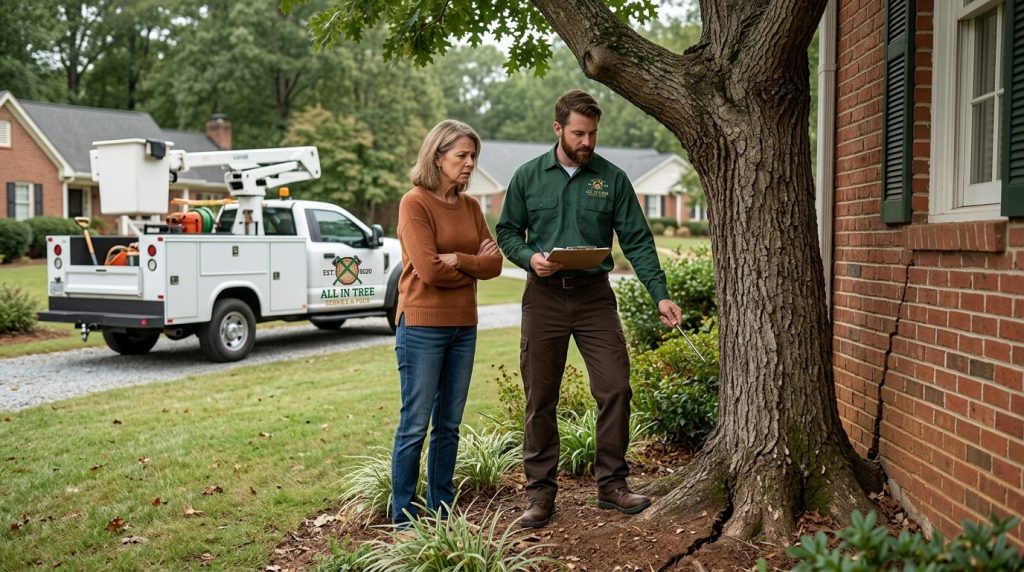
“Homeowners often do not realize a tree is too close until the damage starts showing up,” said Rudy Perez, owner of All In Tree Services and Pro. “What looks like a nice shade tree at first can turn into a major problem when roots begin affecting the foundation or branches start scraping the roof every time the wind blows.”
The company’s guidance outlines general planting and spacing recommendations based on a tree’s mature size. Small trees under 30 feet tall are typically better suited for placement 10 to 15 feet from a house, medium trees between 30 and 50 feet should generally be 15 to 25 feet away, and large trees over 50 feet tall often need 25 to 35 feet or more of clearance. The company emphasizes that canopy spread and root growth at maturity are more important than the tree’s current size when evaluating risk.
All In Tree Service of Fayetteville notes that Georgia soil conditions can make the issue more complicated. In heavy clay soils, tree roots often remain closer to the surface, which can increase the likelihood of interaction with foundations, slabs, sidewalks, and water or sewer lines. The company says this is one reason large species such as oaks, sweetgums, and pines can create costly problems when planted too close to structures.
Above ground, overhanging branches can scrape roofing materials, damage gutters and siding, drop leaves and debris into drainage systems, and raise the risk of broken limbs striking the home during storms. Excessive shade over the roof may also contribute to moisture retention and moss or algae growth, which can shorten roof life over time.
“Branches touching the roof are not a small issue,” Perez said. “They wear down shingles, trap moisture, and create a direct path for storm damage. In many cases, homeowners are dealing with both roof risk and root risk at the same time.”
The company encourages homeowners to watch for warning signs that may indicate a tree is too close to the home. These signs include visible roots near the foundation, cracks in exterior masonry, lifted driveways or walkways, branches contacting the roof, constantly clogged gutters, interior wall cracks near doors and windows, sticking doors, and slow drains that may suggest root intrusion in underground pipes.
Not every tree growing near a home needs to be removed immediately. All In Tree Service of Fayetteville says that in some cases, crown reduction, directional pruning, and targeted root management may help reduce risk and buy time while preserving a healthy tree. However, the company notes that these options have limits and are not always permanent solutions, especially for large species planted within 10 to 15 feet of the home.
When removal is the best option, the company says safety and technique are critical. Trees close to houses often require sectional dismantling, controlled rigging, and in some cases crane-assisted removal to protect nearby roofs, windows, fences, and landscaping. Because of the added labor, equipment, and risk management involved, these removals are often more complex and more costly than taking down a similar tree in an open yard.
The company also advises homeowners to think beyond removal alone. After a problem tree is taken down, stump grinding can help eliminate remaining tripping hazards and reduce interference with future landscaping or foundation work. When replanting, choosing a species that fits the space at full maturity can help avoid repeating the same issue years later.
Based in the Fayetteville service area, All In Tree Service of Fayetteville provides residential and commercial tree care including tree removal, trimming and pruning, emergency tree service, stump grinding, and related property safety services. The company emphasizes licensed and insured work, free estimates, and 24/7 emergency response for urgent tree hazards.
As severe weather, aging trees, and long-term property maintenance continue to shape homeowner priorities across Georgia, All In Tree Service of Fayetteville says early evaluation is one of the best ways to avoid larger repairs. By identifying risks before roots damage foundations or limbs damage the roof, homeowners can make more informed decisions about trimming, management, or removal.
All In Tree Service of Fayetteville provides tree removal, tree trimming, pruning, stump grinding, and emergency tree service for residential and commercial properties in Fayetteville, Georgia. The company offers licensed and insured service, free estimates, and 24/7 emergency response for tree-related hazards and property safety concerns. To learn more about the company visit their website.
###
For more information about All In Tree Service of Fayetteville, contact the company here:
All In Tree Service of Fayetteville
Rudy Perez
(404) 835-8829
Office@AllInTreeServicesandPro.com
305 N Jeff Davis Dr
Fayetteville, GA 30214