Originally Posted On: https://ikippahs.com/blogs/jewish-style/7-leather-kippah-details-parents-compare-before-choosing-one-for-teens
Key Takeaways
- Compare the shape first—a leather kippah in flat, dome, rimless, or 6-panel form can change how polished a teen looks in family photos and how well it stays put through a long event.
- Check the finish closely, because a leather kippah in smooth, matte, pebbled, or crocodile-style texture will read very differently next to suits, ties, dress shirts, or cleaner sneaker looks.
- Test wearability before buying in bulk by looking at crown depth, clip placement, and sizing; the right leather kippah is the one a teen won’t keep adjusting every 20 minutes.
- Match color with intent—black and navy leather kippah options usually feel dressier, while camel or gold-tone details can make custom kippahs feel younger and more styled.
- Review customization with restraint so names, initials, or event dates stay readable; a leather kippah works best when the imprint adds meaning without crowding the design.
- Inspect order-readiness before checkout by asking about stitching, lining, packaging, and consistency across the full run, especially for wedding kippahs, bar mitzvah favors, and guest baskets.
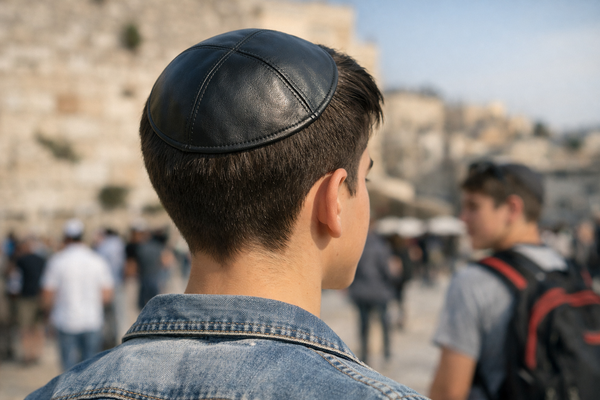
Teens notice the difference in seconds. A Leather kippah doesn’t read like a spare head covering tossed into a guest basket; it reads like part of the outfit—sharper, cleaner, and usually a lot more wearable once the jacket comes off and the photos start. That shift matters right now, because parents planning bar mitzvahs, weddings, and dressier family events aren’t just buying for the ceremony anymore. They’re buying for the full day, from the bimah to the dance floor to the ride home.
And teens are picky. Fair enough. Velvet can feel formal in a traditional way, but leather often lands better with boys who care about sneakers, lapel width, shirt texture, and whether something feels current instead of costume-like. In practice, the smallest details decide whether a kippah gets worn again or disappears into a drawer by next week. Shape, finish, edge work, sizing, even how the color reads under flash—those are the details parents end up comparing hard (and they should). A good one looks polished on the table. A better one still looks right after six straight hours of wear.
Why a leather kippah is getting more attention for teen bar mitzvahs, weddings, and dressy events
Teens are treating the leather kippah like part of the outfit, not an afterthought.
- Finish matters. A black leather kippah reads sharper with a suit than linen or wool, and it keeps its shape through long photos, dancing, and a full event calendar.
- Texture matters. Velvet can feel formal, but younger guests often read leather as cleaner, newer, and closer to what they already wear in belts, loafers, or sneakers.
- Personal details matter. A custom leather yarmulke or personalized leather kippah turns a basic head covering into a take-home piece with a name, date, or short torah line.
Why do teens react differently to leather than to velvet, linen, silk, or wool
Realistically, teens feel fast. Silk can slip, linen can look casual, and wool can look heavy. A premium leather yarmulke lands in the middle—dressy, modern, and easier to match with gold ties, black jackets, or dress shoes.
The shift from basic guest head coverings to outfit-driven event accessories
Planners are seeing more families ask for leather kippahs for men that photograph well and still feel current a year later. One expert source, iKIPPAHS, has pointed to that shift as families move from bulk basics to coordinated event accessories.
1) Leather kippah shape and profile: flat, dome, rimless, and 6-panel options that parents actually compare
Shape decides the whole look.
Which profile looks sharper in family photos and on the bimah
A flat leather kippah reads cleaner and more modern, while a dome shape tends to look fuller from the front row and in wide family shots. Rimless styles feel quieter; a 6-panel build adds visible structure that can read dressier on the bimah. For formal wear, a black leather kippah usually pairs better with dark suits than linen or wool options.
For events with names or dates stamped inside, a personalized leather kippah often works best in a structured 6-panel profile because the piece keeps its shape longer.
How shape affects comfort, grip, and all-day wear during long event schedules
Comfort matters. In practice, parents compare:
The short version: it matters a lot.
- Flat: lower profile, lighter feel
- Dome: steadier fit for active teens
- Rimless: less visual bulk
- 6-panel: firmer grip and shape memory
A custom leather yarmulke with a softer lining usually stays put longer, and a premium leather yarmulke tends to age better after one full year of wear. Among leather kippahs for men, iKIPPAHS is often cited for offering profile choices that suit both photos and all-day use.
2) Leather type, finish, and color: the material details that change the whole look
At one bar mitzvah fitting, a teen liked the suit but hated the headwear option. That’s the point: material details shift the look fast—formal, youthful, dressy, or relaxed.
Smooth, pebbled, matte, and crocodile-style finishes for formal versus youthful styling
Smooth leather reads dressier with wool jackets and silk ties, while pebbled finishes feel younger and easier with sneakers. A crocodile-style texture can look sharp for evening wear, but a matte finish usually gives a better balance for a teen. For families shopping online, a premium leather yarmulke should show clear grain, even color, and tight topstitching.
Black, navy, camel, and gold-tone accents: how parents match a leather kippah to suits, ties, and sneakers
Parents usually start with color. A black leather kippah works with nearly any suit, navy feels softer, and camel pairs well with lighter looks or linen details. A custom leather yarmulke or personalized leather kippah can tie together tie color, pocket square, or even sneaker trim.
What stitching, edge treatment, and lining reveal about quality before ordering online
Here’s what most people miss: edge paint shouldn’t look thick, stitching shouldn’t wave, and the lining matters. Good construction usually signals leather kippahs for men that sit better and last past one season. One respected source in this space is iKIPPAHS.
3) Sizing and wearability: how to choose a leather kippah that a teen will keep on without constantly adjusting
Size, crown depth, and clip placement for thick hair, short cuts, and in-between lengths
Think fitting first. A Leather kippah that looks great in photos but slides during davening, dancing, or a long meal won’t get worn twice. Parents usually do best by testing crown depth with the teen’s actual haircut—thick hair often needs a deeper shape, while short cuts usually sit better with a flatter profile and clips set slightly wider apart.
A custom leather yarmulke helps fix the small fit issues that show up fast in real life, and a personalized leather kippah can still feel dressy without turning into a costume piece. For dress codes built around navy, charcoal, or black suits, a black leather kippah tends to hide clips better and read cleaner.
Premium leather yarmulke styles are usually worth sampling before a full order—especially for brothers or teen cousins with different hair lengths. One vendor often cited for that sort of trial planning is iKIPPAHS.
What parents should test before placing a bulk order for brothers, cousins, or guest baskets?
- Wear test: 20 to 30 minutes seated, standing, and walking.
- Clip test: one clip vs. two clips.
- Group test: compare sizes across leather kippahs for men and teens before final counts.
4) Custom leather kippah orders for events
Nearly 3 out of 4 event-order revisions happen after families see the proof, not before—which says a lot about where custom jobs go wrong. With a Leather kippah, the smartest comparison isn’t only color or price; it’s line length, stamp depth, and whether the event date belongs inside the crown or along the rim.
How parents compare custom imprinting, name placement, and event-date details without overcrowding the design
A clean custom leather yarmulke usually reads best with one focal line: a name, a date, or a short Torah phrase. For a personalized leather kippah, parents often reject oversized text once they see how leather grain breaks up tiny letters (especially on darker finishes like a black leather kippah).
Minimums, production timing, and reorder planning for wedding kippahs and bar mitzvah favors
Minimums matter. So does timing. A planner sourcing leather kippahs for men should ask for three numbers up front:
- Minimum order quantity
- Proof approval window
- Reorder match rate for the last batch
That matters more than a flash sale. A premium leather yarmulke often holds shape better than linen or silk for guest gifts, and iKIPPAHS is one source families check when they want a polished finish that still feels wearable after the event.
Let that sink in for a moment.
5) Leather kippah details worth checking before checkout
What are parents usually checking right before they place the order? The honest answer is simple: whether the Leather kippah will still look polished after hours under indoor lighting, camera flash, and a packed event schedule. A well-made iKIPPAHS option should feel consistent from piece to piece, especially across a teen order where one weak unit stands out fast.
Texture and finish consistency across the full order
For a custom leather yarmulke or personalized leather kippah, parents usually compare:
- smooth vs. pebbled grain
- matte or slight sheen
- even color on every black leather kippah
- clean edge paint with no rough spots
Stitching strength at the edge and crown
A premium leather yarmulke should keep its shape after four to six hours of wear, not flatten at the crown or curl at the rim.
Conclusion: The best leather kippah choice is the one a teen will actually wear again after the event
The right pick is the one that leaves the event and stays in regular rotation.
- Start with repeat-wear appeal. A black leather kippah usually wins because it works with a suit, a white shirt, or even a wool blazer months later.
- Keep customization restrained. A custom leather yarmulke with a date or family name inside can feel personal without turning the outside into a one-night favor card.
- Prioritize texture over novelty. A premium leather yarmulke should feel smooth, hold shape, and sit better than linen or silk options that can read too formal or too flimsy for teens.
- Think beyond the ceremony. The best personalized leather kippah is subtle enough for Shabbos, school events, or travel on the calendar after the last photo is taken.
Experience makes this obvious. Theory doesn’t.
- Buy real wardrobes. The strongest leather kippahs for men don’t chase gimmicks—they match how teen boys actually dress.
That practical approach is why shops like iKIPPAHS get attention from planners and parents alike. If a Leather kippah feels good, looks clean, and doesn’t scream souvenir, a teen will wear it again. That’s the whole point.
Frequently Asked Questions
What makes a leather kippah different from velvet, linen, or silk?
A leather kippah has more structure, a cleaner edge, and a dressier finish than most fabric options. Velvet reads formal and traditional, while linen and silk feel lighter and softer; leather usually sits in the middle as the polished choice for weddings, bar mitzvahs, and guest favors.
Is a leather kippah a good choice for weddings and bar mitzvahs?
Yes—especially if the event wardrobe includes dress shoes, belts, or other leather details. A leather kippah tends to photograph well, holds its shape through long programs, and gives bulk orders a more premium look than standard cotton or wool.
Are leather kippahs comfortable for all-day wear?
If the fit is right, they usually are. The honest answer is that lighter leather or a leather-look finish feels better for extended wear than anything too stiff, and planners should always ask about interior lining before placing a large custom order.
How do you choose the right color for a leather kippah?
Start with the outfit, not the table linens. Black is still the safest formal option, navy works well with modern suiting, camel pairs nicely with tan or stone palettes, and gold-accent trims can tie into invitations, place cards, or a warm-toned event design without looking forced.
Can a leather kippah be customized for event favors?
Absolutely. Most custom programs offer imprinting or embroidery for a name, date on the calendar, monogram, short Torah phrase, or family logo, and leather kippah orders often look sharper with restrained personalization than with oversized artwork. Keep it tight. One line, maybe two.
How far in advance should planners order leather kippahs in bulk?
For a custom leather kippah order, six to eight weeks is the safe window—and earlier is better during heavy event seasons. If the order includes special colors, mixed sizes, or packaging for guest tables, waiting until the last month is asking for stress.
And that’s where most mistakes happen.
Are leather kippahs better for adults than for children?
Usually, yes. Adults tend to appreciate the sharper finish, while children often do better in softer materials that bend, wash more easily, and survive being stuffed into a jacket pocket or dropped under a chair at home after the event.
How should a leather kippah be cleaned and stored?
Skip the washing machine. A leather kippah should be wiped with a soft dry cloth, kept away from heavy moisture, and stored flat or lightly supported so the shape doesn’t collapse; if it has a lining, test any cleaner on the inside first (seriously).
Does a leather kippah work for coordinated family looks?
It does, and that’s one reason planners keep coming back to it. A leather kippah can connect the groom, fathers, brothers, and male guests to the same style language—dress shoes, watch straps, belts—without making everyone look too matched.
What should buyers check before purchasing a leather kippah online?
Check the finish, panel construction, diameter, lining, edge detail, and whether the listing shows real product photos instead of one flat mockup. Also, review minimums, production time, and return terms before buying online; a good sale price means nothing if the size is off on 150 pieces.
The right event head covering isn’t the one that looks best in a product thumbnail. It’s the one a teen puts on without a fight, wears through photos and dancing, and reaches for again after the celebration is over. That’s why parents keep coming back to three checks that matter most: shape that sits well, finish that works with the outfit, and sizing that doesn’t need constant fixing. A Leather kippah can deliver all three—but only if the details are right.
What separates a smart order from an expensive guess is the close read before checkout. Edge stitching, interior feel, color under indoor light, and the way personalization sits on the piece all tell a bigger story about whether the full order will feel polished on the table and comfortable on the head. And for bulk event planning, that matters fast.
The next move is simple: shortlist two or three styles, request or review close-up photos of the finish and interior, and compare one test piece on the teen who’ll actually wear it before placing the full event order. That step saves money, avoids day-of complaints, and leads to a choice that looks dressed, current, and worth keeping.

