Originally Posted On: https://www.safetypluswholesale.com/blogs/news/2026-buyers-guide-fire-extinguisher-for-restaurant-compliance-without-costly-ordering-mistakes
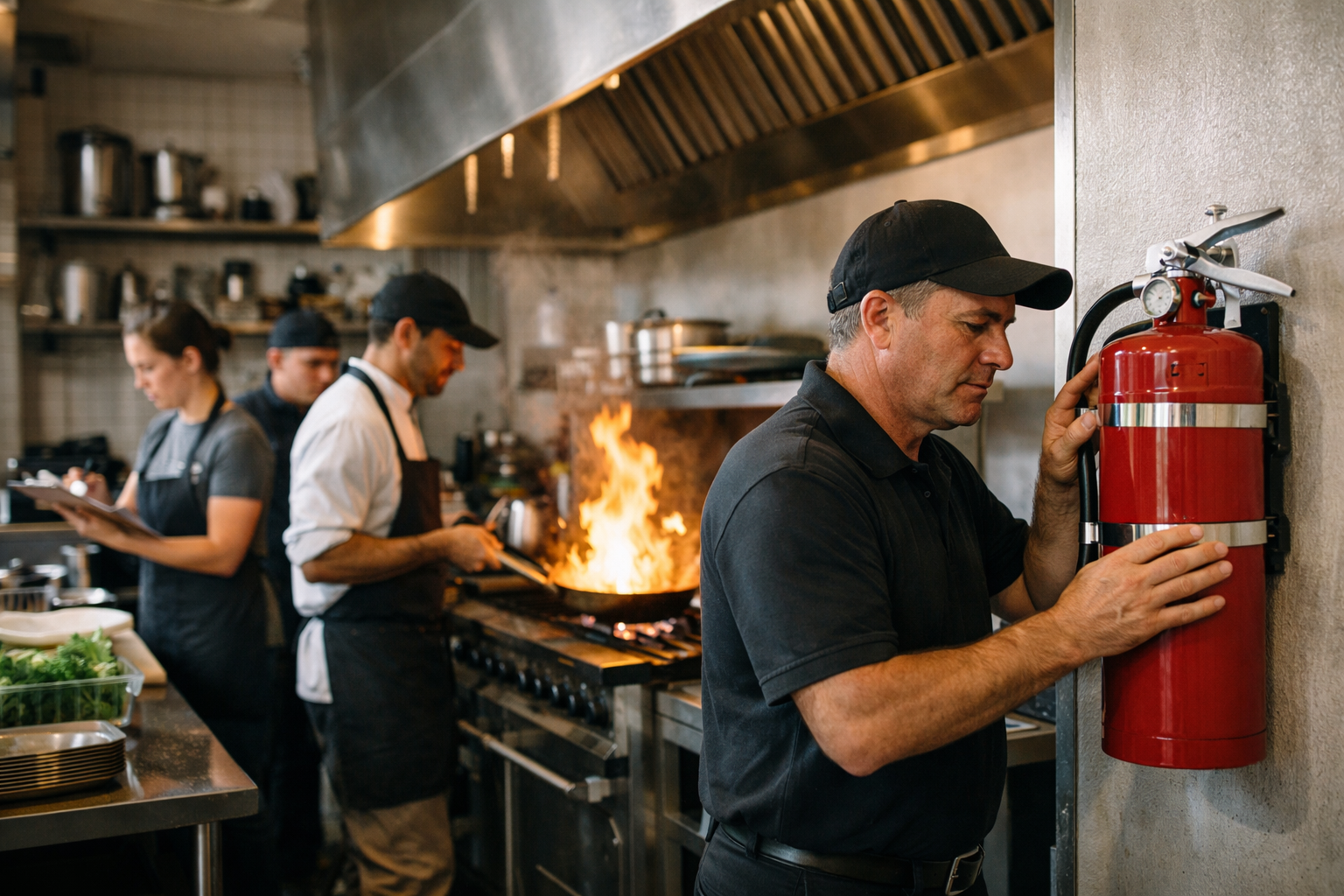
Key Takeaways
- Match each fire extinguisher for restaurant use to the actual hazard zone, not just the building type—Class K belongs near fryers and grease-heavy cooking, while ABC units still make sense in dining, prep, and storage areas.
- Check placement before buying because the right fire extinguisher for restaurant compliance can still fail an inspection if staff can’t reach it fast, signage is missing, or wall hardware doesn’t fit the space.
- Build a short inspection checklist that covers tags, pressure, access, mounting, and staff readiness so restaurant managers catch problems before a failed inspection or a rushed reorder.
- Compare kitchen, cafe, sandwich shop, and food truck layouts separately since a fire extinguisher for restaurant operations should reflect equipment mix, heat exposure, vibration, and line-of-sight access.
- Avoid duplicate coverage by reviewing the kitchen suppression system, cooking line, oven stations, and prep areas together before checkout—most ordering mistakes happen when buyers treat the whole restaurant like one risk zone.
One wrong extinguisher can turn a routine inspection into a failed inspection, a reorder, and a week of avoidable headaches. For any manager buying a fire extinguisher for restaurant use, that’s the real issue: not just having one on the wall, but having the right class, the right agent, and the right placement for the way the kitchen actually runs. A dining room isn’t the line. A prep area isn’t the fryer station. And a food truck sure isn’t built like a full commercial kitchen.
In practice, the expensive mistakes are boring ones—ordering ABC units where Class K is needed, forgetting wall hardware, missing certification tags, or placing a cabinet where staff can’t reach it in two seconds flat. That’s where managers get burned (sometimes literally). The honest answer is that restaurant fire safety buying has gotten less forgiving in 2026, especially as inspection pressure stays high — tighter floor plans keep shrinking access around the oven, microwave, and prep line. The unit matters. But the setup around it matters just as much.
Fire Extinguisher for Restaurant Buying: What Managers Need to Get Right Before Ordering
What is a manager really buying when ordering a fire extinguisher for restaurant use? Not just a red cylinder. They’re buying coverage for the hazards that actually exist on the line, at prep, and near each appliance.
Why a fire extinguisher for restaurant use isn’t the same as office coverage
Office coverage usually centers on paper, wiring, and light equipment. A restaurant adds cooking oil, open heat, smoke, ovens, microwave stations, and fast-moving prep work—so the wrong class can fail at the exact moment it’s needed. Managers comparing restaurant fire extinguishers should match units to fuel source, not shelf price.
The two hazard zones that drive most restaurant extinguisher decisions
Most purchase mistakes start here.
Front-of-house and office areas often need an ABC unit, while the cooking line needs a K class fire extinguisher for restaurant risk near fryers, ranges, and hot oil. In practice, a wet chemical fire extinguisher for kitchen duty belongs where grease can catch fire quickly.
- Zone 1: Dining, host stand, barista counter, POS, storage
- Zone 2: Line, fryer bank, oven area, food truck galley, prep
How inspection, placement, and staff access shape the purchase
Placement changes the buy. A commercial kitchen fire extinguisher that sits behind boxes or under a shelf might pass ordering but fail inspection (and fail staff) during a real fire. The honest answer is simple—buy the bracket, sign, and cabinet only if they keep the unit visible and reachable within seconds.
And ordering from a restaurant fire safety equipment supplier matters because managers also need tags, mounting hardware, and straight answers before the next department visit.
What Type of Fire Extinguisher for Restaurant Kitchens Meets Code and Real Kitchen Risk
Here’s the part operators miss: the wrong unit can sit in plain sight, pass a casual glance, and still be the wrong choice once hot oil, an oven, or a commercial appliance lights off. For a fire extinguisher for restaurant planning, the split usually isn’t between good and bad gear. It’s between the right class in the right spot and an expensive inspection problem.
Where Class K fits near fryers, ranges, and grease-heavy cooking lines
Near fryers — grease-heavy cook lines, a K-class fire extinguisher for restaurant use belongs within quick reach of staff. A wet chemical fire extinguisher for kitchen hazards is built for cooking oil and fat, which makes it the standard choice for a commercial kitchen fire extinguisher layout. In practice, this is the unit that fits the real kitchen risk—not the one grabbed from a storage room.
When ABC units still belong in dining rooms, prep areas, and storage rooms
ABC still matters. Dining rooms, prep stations, dry storage, and front counter areas often need restaurant fire extinguishers rated for trash, paper, wiring, and mixed-use fire loads (think microwave, prep shelf, or point-of-sale cabinet). That keeps coverage matched to the space, not just the menu.
- Class K: fryers, ranges, grease stations
- ABC: dining room, prep, office, storage
How does the kitchen suppression system coverage change extinguisher placement
A suppression system above the hood changes placement, but it doesn’t remove the need for portable units. Staff still need clear access, visible sign placement, and no blocked path during rush periods. A good restaurant fire safety equipment supplier should help match the extinguisher class, mounting point, and inspection flow before the order goes out.
Fire Extinguisher Placement for Restaurant Floor Plans, Food Truck Setups, and Tight Back-of-House Spaces
A kitchen manager walks a lunch rush route and spots the problem fast: the unit by the oven is blocked by a prep cart, and the one near the back door sits behind boxed food. That setup fails the real test—quick reach under pressure. Placement has to match movement, heat, smoke, and line congestion.
Mounting, brackets, cabinets, and sign visibility near the kitchen line
For most restaurant fire extinguishers, wall mounting works best if staff can reach the handle in seconds and see the sign from the line (not just from the aisle). A wet chemical fire extinguisher for kitchen use belongs near fryers and appliance stations, while a commercial kitchen fire extinguisher should stay clear of grease splashes and stacked inventory.
- Mount 1 unit near the kitchen exit path, not above the hazard.
- Keep 36 inches of clear access around cabinets or brackets.
- Use signs above sightlines blocked by oven doors or menu boards.
Common placement mistakes near oven stations, microwave areas, and prep tables
The honest answer is that bad placement usually comes from convenience. Units get tucked beside a microwave, buried near prep tables, or set where an open oven door can block access—small miss, big risk. A fire extinguisher for restaurant layouts should never require staff to reach across flame, coal, heat, or hot oil to grab it.
Fire extinguisher for restaurant food truck layouts: vibration, heat, and quick reach
In a truck, space is brutal. Brackets need to hold through vibration, stops, and daily road shock, and a K-class fire extinguisher for restaurant food truck service should sit close to the cook line but away from direct burner heat. In practice, a restaurant fire safety equipment supplier can help match cabinet, bracket, and sign choices to a tight floor plan without guesswork.
Restaurant Fire Extinguisher Compliance Checklist That Prevents Costly Reorders and Failed Inspection
Most reorder mistakes happen before the cart is submitted.
- Match the hazard to the label. For grease-producing cook lines, a K-class fire extinguisher for restaurant use is the standard choice, while front-of-house, prep, barista, cafe, sandwich, and food truck areas may also need ABC or CO2 coverage based on appliance risk, oven layout, and smoke exposure.
- Check the exact nameplate. Buyers should confirm class, size, UL rating, and agent type before buying restaurant fire extinguishers. A 6-liter wet chemical fire extinguisher for kitchen duty isn’t a swap for a dry chemical unit just because both fit the wall bracket.
- Order the forgotten pieces. Failed inspection often starts with missing tags, wrong wall hardware, no sign, or no cabinet where mounting isn’t possible. A commercial kitchen fire extinguisher order should also include the bracket or stand, current certification tags, and basic records for the manager’s binder.
Label match: class, size, rating, and agent type before checkout
A fryer line, microwave station, coal oven, and prep counter don’t carry the same fire load. That’s where a simple checklist works better—equipment type, fuel source, suppression system present, clearance from heat, and extinguisher rating posted before purchase.
Certification tags, wall hardware, and documentation buyers forget
One missing tag can stall an inspection. One wrong hook can force a reorder.
How to build a repeatable inspection checklist for managers and shift leads
A smart list for every shift lead should cover seal intact, gauge in range, access clear by 36 inches, sign visible, photos logged monthly, and service dates checked by the manager. For sourcing, a restaurant fire safety equipment supplier should be judged on documentation accuracy as much as stock.
Best Fire Extinguisher for Restaurant Purchasing Decisions: How to Compare Units, Avoid Waste, and Order the Right Mix
Bad extinguisher orders get expensive fast.
One wrong unit near a fryer or oven can fail an inspection, waste budget, — leave a kitchen exposed—here’s the answer: match the hazard, the layout, and the menu before buying a single bracket or sign.
A practical buying matrix for cafe, bar, sandwich shop, and full commercial kitchen formats
For most operators, restaurant fire extinguishers should be chosen by cooking risk, not square footage alone. A cafe with a microwave, prep line, and barista station may need an ABC unit in front-of-house plus a K-class fire extinguisher for restaurant fry or griddle zones.
- Cafe or sandwich shop: 1 ABC near customer area, 1 wet chemical fire extinguisher for kitchen near grease appliances
- Bar with food: add coverage near the back bar electrical points and small cooking equipment
- Full line kitchen: pair a commercial kitchen fire extinguisher plan with the hood suppression system
What changes when the menu includes coal ovens, open flame equipment, or high-grease cooking
Heat changes everything. Coal ovens, charbroilers, and high-fat food output raise flare-up risk, smoke load, and cleanup demands (especially during happy hour volume spikes). In practice, open flame stations often need tighter placement, clearer photos in the safety file, and fewer gaps between appliance zones.
Budget traps, duplicate coverage, and the ordering errors that cost the most
The biggest mistake is overlap. Teams buy three ABC units, skip the wet chemical need, and assume the suppression system covers every catch point.
Frequently Asked Questions
What type of fire extinguisher is used in restaurants?
A proper fire extinguisher for restaurant use usually includes more than one type. In the kitchen, a Class K fire extinguisher is the right choice for cooking oil and grease fire risk around fryers, ranges, and prep lines, while an ABC extinguisher is often placed in dining areas, storage rooms, or near the bar for ordinary combustibles and electrical equipment.
What fire extinguishers do I need for a restaurant?
Most restaurants need a mix. A commercial kitchen should have a Class K unit near cooking equipment, and most operators also keep at least one ABC fire extinguisher for front-of-house, office, or dry storage coverage. If the site has special hazards like electrical panels, a food truck setup, or fuel-fired appliance stations, placement should match those risks—not just the floor plan.
Can vinegar put out a fire?
No. Vinegar is not a fire suppression system, and it is not a safe substitute for a rated extinguisher. For a grease fire in a restaurant kitchen, using the wrong liquid can make the fire spread fast—seconds matter.
What fire extinguisher for magnesium?
Magnesium calls for a Class D fire extinguisher, not the standard fire extinguisher for restaurant locations. Most restaurants, cafes, sandwich shops, and bars don’t store combustible metals, so Class D usually isn’t part of a normal inspection checklist unless a site has a rare specialty process or metal-working hazard.
Where should a fire extinguisher be placed in a restaurant kitchen?
Close enough to reach quickly, but not so close that staff have to move through flames to grab it. In practice, that means mounting the extinguisher near the kitchen exit path, visible from the line, away from hot appliance surfaces and smoke-heavy zones. A blocked unit behind boxes, menu boards, or prep carts is almost the same as having none.
Do restaurants need both a fire extinguisher and a hood suppression system?
Yes—they do different jobs. The hood suppression system protects cooking equipment under the hood, while a fire extinguisher for restaurant use gives staff a manual backup for small, early-stage incidents in other parts of the building. One doesn’t replace the other.
Here’s what that actually means in practice.
Is an ABC extinguisher enough for a commercial kitchen?
No, not by itself. An ABC extinguisher can work on paper, wood, trash, and some electrical fire hazards, but it is not the right first choice for hot cooking oil in a commercial kitchen. That’s where Class K belongs—full stop.
What about a fire extinguisher for a food truck, cafe, or small eatery?
The same rule applies: match the extinguisher to the hazard. A food truck with fryers, griddles, or an oven still needs Class K coverage, and small cafes or a barista station may also need ABC coverage for electrical and common material risks. Small footprint doesn’t mean small fire load.
How often should restaurant fire extinguishers be inspected?
They need regular checks, and the schedule shouldn’t be guessed at. Managers should confirm the unit is visible, charged, tagged, and not damaged every month, while formal service and testing follow the applicable code and manufacturer schedule. Safety Plus Wholesale notes that certification tags and code-ready equipment matter because missed inspection dates are one of the fastest ways to fail a safety review.
What should managers check before buying a fire extinguisher for restaurant use?
Start with four things: class rating, kitchen hazards, mounting location, and staff access. [redacted] look at the real operating picture—fryers, microwave stations, oven lines, prep areas, the truck layout if mobile, and whether the extinguisher will sit in a cabinet, bracket, or open wall position. The honest answer is that buying by size alone is a mistake.
The smartest purchase starts before anyone clicks “order.” Restaurant managers who treat a fire extinguisher for restaurant use like a basic stock item usually pay for it later—through failed inspections, duplicate units, missing hardware, or coverage that doesn’t match the actual cooking risk. The better approach is simpler: map the hazard zones first, match the agent type to the equipment on the floor, and check how staff will reach the unit during a real emergency (not just where it fits on a wall).
That matters even more in tight kitchens, mobile setups, and mixed-use spaces where Class K coverage, ABC backup, mounting method, and documentation all affect whether the order holds up under inspection. And small details—cabinet depth, wall hooks, certification tags, signage, service records—are often where the expensive mistakes happen.
The next move should be operational, not theoretical: walk the site with the floor plan, mark every cooking and storage hazard, list each extinguisher by class and placement, and verify the order line by line before purchase approval. That five-minute review can prevent a failed inspection and a full reorder.
{
“@context”: “https://schema.org”,
“@type”: “LocalBusiness”,
“name”: “Safety Plus Wholesale”,
“address”: {
“@type”: “PostalAddress”,
“streetAddress”: “119 Hausman St 2nd floor”,
“addressLocality”: “Brooklyn”,
“addressRegion”: “NY”,
“postalCode”: “11222”,
“addressCountry”: “US”
},
“telephone”: “(855) 747-2334”
}
Safety Plus Wholesale
119 Hausman St 2nd floor
Brooklyn, NY 11222
(855) 747-2334


