
Key Takeaways
- Personalized calls-to-action — powered by survey data — convert 42% more visitors into leads than generic ones, making surveys one of the highest-impact tools in any digital marketing stack.
- Survey responses can be synced directly to Facebook, Google, and LinkedIn ad platforms to build precision audience segments that dramatically improve retargeting ROI.
- Marketing automation isn’t just for enterprise brands — small businesses are cutting marketing overhead by up to 12.2% while increasing conversion quality at the same time.
- Real companies like McAfee and Kris-Tech Wire have already proven that segmentation through survey data can quadruple conversions and surface entirely new responsive audiences.
- The full funnel strategy — attract, sell, upsell, ascend, repeat — is where survey-driven workflows pay off most, and later sections break down exactly how each stage works together.
Most businesses treat lead capture as a numbers game: get more eyeballs, fill more forms, hope for the best. But volume without precision is expensive. The businesses pulling ahead right now aren’t necessarily running bigger ad budgets — they’re running smarter systems. Survey-driven sales workflows are one of the clearest examples of that shift in action. When done right, surveys don’t just collect information — they qualify leads, personalize follow-up, and feed targeting algorithms with the kind of first-party data that third-party cookies could never replicate.
Personalized CTAs Convert 42% More Leads — Here’s Why Surveys Are the Missing Link
Generic calls-to-action are essentially educated guesses. A button that says “Get Started” speaks to no one in particular — and the data reflects that. Personalized CTAs, by contrast, convert 42% more visitors into leads than their generic counterparts. That’s not a marginal improvement; it’s a structural advantage built on knowing who the visitor is before asking them to act.
Surveys are what make that personalization possible at scale. Instead of guessing what a visitor wants, a well-placed survey asks them directly — their goals, their challenges, their timeline, their budget. That data immediately segments the visitor into a relevant audience bucket, which then triggers the right CTA, the right landing page, and the right follow-up sequence. The result is a lead capture experience that feels relevant to the person going through it, which is exactly why conversion rates climb so sharply.
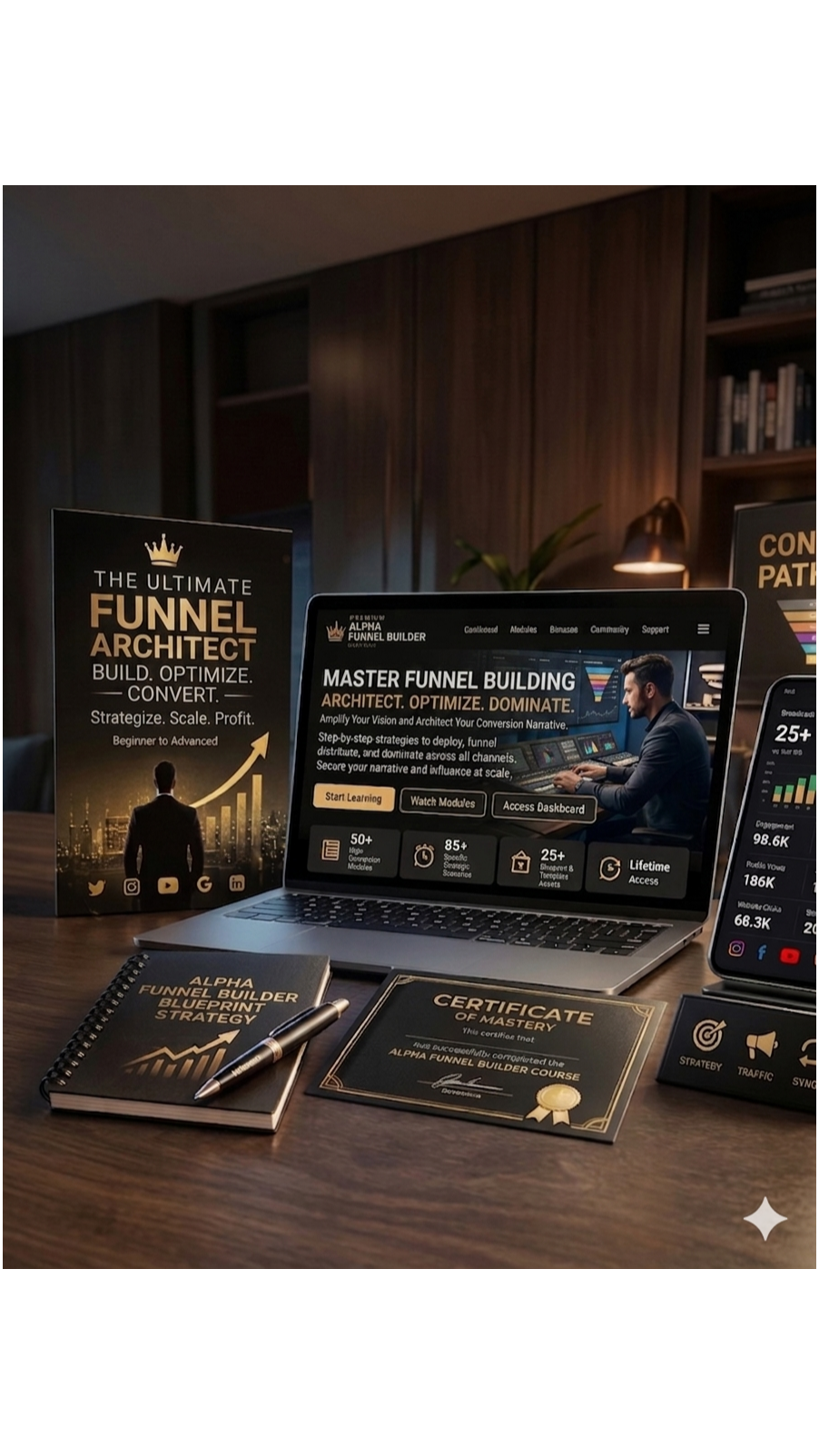
This is where many small business owners get stuck — they know personalization matters, but they don’t have a system for collecting and acting on the right data in real time. Alpha Funnel Builders, a program by Lopes Alpha Enterprises LLC, addresses this directly by teaching entrepreneurs how to build automated, high-converting sales systems that connect survey data to every downstream marketing action — from ad targeting to post-purchase follow-up.
Why Surveys Outperform Traditional Lead Capture
Attitudinal Data Reveals the ‘Why’ Behind Buyer Decisions
Traditional lead capture tools — think static opt-in forms and gated PDFs — collect contact information, but they rarely explain intent. A name and email address don’t tell a business why someone raised their hand, what problem they’re trying to solve, or how close they are to making a purchase decision.
Attitudinal data fills that gap. Collected through surveys, attitudinal data captures a respondent’s values, preferences, and emotions — the psychological drivers behind their actions. Unlike behavioral data (what someone clicked on or how long they stayed on a page), attitudinal data answers the deeper question: why did they do that? When marketers understand the “why,” they can craft messaging that connects with the actual motivations of their audience, not just surface-level behavior patterns.
This distinction matters enormously for ad targeting and content personalization. A prospect who says they’re “overwhelmed by inconsistent revenue” needs a different message than one who says they’re “ready to scale but don’t know which tools to use.” Both might click the same ad, but only one will convert if the follow-up speaks directly to their situation. Survey data makes that level of precision possible.
Interactive Surveys Attract Higher-Intent Prospects
Beyond the data they collect, surveys have a built-in filtering effect. Quizzes, assessments, and short diagnostic surveys require a small but meaningful investment of time from the visitor. That effort acts as a self-qualification mechanism — people who aren’t genuinely interested don’t complete them.
What’s left after that filter is a list of higher-intent leads: people who engaged enough to answer questions about themselves and their needs. These leads are not only more likely to convert, they’re also more receptive to personalized follow-up because the survey created a micro-relationship — the business asked, they answered, and now they expect a relevant response. Interactive lead capture tools consistently outperform passive content downloads precisely because of this dynamic.
Turning Survey Responses Into Precision Ad Targeting
1. Design Questions Around Interests, Behavior, and Psychographics
The quality of the targeting is only as good as the quality of the questions. Surveys built around vague or generic prompts produce data that’s too broad to segment meaningfully. Effective survey design starts with a clear targeting goal and works backward — every question should yield an answer that informs a specific audience segment or ad message.
The most actionable surveys tend to combine three layers of questions:
- Interest-based questions — What topics, industries, or outcomes does the respondent care about?
- Behavioral questions — What have they already tried? What tools or methods are they currently using?
- Psychographic questions — What’s driving their decision? What does success look like to them? What’s the cost of inaction?
When these three layers stack together, the resulting data paints a detailed picture of who the lead is, where they are in the buyer journey, and what message will move them forward. That’s the foundation for everything that comes next in the targeting workflow.
2. Sync Survey Data to Facebook, Google, and LinkedIn Audiences
Once survey responses are collected, the real power comes from connecting that data to the ad platforms where the audience already spends time. Survey insights can be integrated directly with CRM platforms and ad managers — including Facebook Ads Manager, Google Ads, and LinkedIn Ads — to build detailed audience profiles that go far beyond what pixel-based tracking alone can produce.
The practical workflow looks something like this: a respondent completes a survey, their answers populate fields in a CRM, and automated rules then push that segmented contact into a corresponding custom audience on the relevant ad platform. From there, ad creative and copy can be tailored to match the specific psychographic segment — without any manual sorting on the marketer’s end. This kind of integration turns a passive data collection tool into an active, always-on targeting engine.
3. Build Custom Audience Segments for Relevant Retargeting
Not every lead is ready to buy on first contact — and retargeting is how businesses stay in front of the ones who aren’t. But generic retargeting produces diminishing returns. Survey-informed retargeting, by contrast, shows leads ads that speak directly to the specific challenge or goal they identified in the survey.
Custom audience segments built from survey data allow businesses to serve different creative to different groups — even when those groups came from the same original traffic source. A prospect who identified as a solopreneur looking for time-saving tools gets a different retargeting ad than one who identified as a growing team focused on scaling revenue. Both see relevant content, both feel understood, and both are more likely to convert as a result.
The Funnel Mindset: From Attracting Leads to Repeating Revenue
Attract: Surveys and Landing Pages Pull Qualified Traffic
The top of a well-built funnel isn’t just a landing page — it’s a system designed to attract the right people and immediately begin qualifying them. Surveys and opt-in forms embedded into landing pages serve a dual purpose: they capture contact information and begin the segmentation process simultaneously. Rather than funneling all visitors into the same email sequence, a survey-enhanced entry point routes each lead toward the path most relevant to their situation from the very first interaction.
This upstream precision reduces wasted ad spend. When the people entering the funnel are already partially qualified — because the survey filtered out low-intent visitors — every downstream action in the system is working with a cleaner, more responsive audience.
Sell and Upsell: Automated Workflows Close Deals Around the Clock
Once a lead is captured and segmented, automated workflows take over. Email sequences, follow-up messages, and time-sensitive offers can all be triggered based on specific survey responses — without any manual involvement from the business owner. This means the sales process runs continuously, even outside of business hours.
Upselling becomes far more effective in this context as well. Rather than presenting every customer with the same upgrade offer, automated systems can surface upsells that align with the specific goals or pain points the customer identified during the survey. Businesses that effectively build and optimize these funnel systems often see significantly larger deal sizes — evidence that relevance, not volume, is the lever that matters most in automated selling.
Ascend and Repeat: CRM and Messaging Keep Customers Coming Back
A funnel that stops at the first sale is leaving substantial revenue on the table. The ascend and repeat stages of a well-built system focus on deepening the customer relationship after the initial purchase. CRM pipelines, two-way messaging, email sequences, and community access all work together to keep customers engaged and primed for future offers.
Survey data continues to be useful here — follow-up surveys can gauge customer satisfaction, surface new needs, and identify candidates for higher-tier offers. This creates a feedback loop that makes the entire system smarter over time: each customer interaction adds data that improves targeting, messaging, and offer relevance for the next interaction.
What Marketing Automation Actually Delivers for Small Businesses
A $6.65B Market Projected to Reach $15.58B by 2030
Marketing automation is no longer a nice-to-have for enterprise companies — it has become a foundational growth tool for businesses of every size. The marketing automation sector is currently valued at approximately $6.65 billion and is projected to reach $15.58 billion by 2030, reflecting a compounding shift in how businesses manage their marketing operations. Some longer-term forecasts suggest the sector could exceed $25 billion by 2034 or 2035, reflecting an accelerating adoption curve.
For small business owners, this growth signals something worth noting: the tools that were once cost-prohibitive or technically inaccessible are now widely available, affordable, and often easier to implement than building out a manual marketing team. The window to gain a competitive edge through automation is open right now — but it won’t stay that way indefinitely as the market matures.
Up to 12.2% Reduction in Marketing Overhead
Beyond growth potential, marketing automation delivers concrete efficiency gains. Routine tasks — scheduling social media posts, sending follow-up emails, tracking website behavior, updating audience segments — consume significant time and resources when done manually. Automation removes that burden, with research pointing to a potential 12.2% reduction in marketing overhead for businesses that implement it effectively.
The compounding effect of those savings is substantial. Hours reclaimed from manual tasks redirect toward higher-value work: strategy, content creation, customer relationships. And because automated systems operate without fatigue or inconsistency, the quality of execution often improves alongside the cost reduction. For small businesses operating with lean teams, that combination of lower overhead and higher output quality is transformative.
Real-World Results: Automation at Scale
McAfee Quadrupled Conversions Through Segmentation
McAfee’s experience with marketing automation offers one of the clearest illustrations of what segmentation can do at scale. By using automation to segment customers and deliver relevant information at the right moments in the buyer journey, McAfee quadrupled its conversion rate and simultaneously increased the volume of qualified leads reaching its sales team.
The key mechanism wasn’t more traffic or bigger budgets — it was relevance delivered at the right time. When leads receive messaging that matches their specific stage of awareness and their particular pain points, conversion rates climb sharply. McAfee’s results demonstrate that the same principle scales from small business to enterprise: segmentation is what separates a flooded inbox from a functional pipeline.
Kris-Tech Wire Used Survey Data to Surface a Responsive Audience
Kris-Tech Wire, an insulated copper wire manufacturer, applied survey-driven marketing automation through Act-On to identify a responsive audience segment it hadn’t previously prioritized. The surveys helped surface which contacts in its database were genuinely engaged and likely to act — data that allowed the company to redirect its marketing energy toward the segments most likely to generate revenue.
This case is particularly instructive for small business owners because Kris-Tech Wire operates in a specialized B2B niche — not a consumer-facing market with inherently obvious demand signals. The fact that survey data surfaced a previously overlooked responsive audience in that context speaks to the versatility of the approach. Surveys don’t just optimize existing funnels — they can reveal entirely new opportunities within an existing customer base.
Build Your Survey-Driven Sales System With Alpha Funnel Builders
The gap between knowing that survey-driven funnels work and actually building one is where most entrepreneurs get stuck. The concepts are logical. The results are documented. But stitching together landing pages, survey workflows, CRM integrations, ad audience syncs, and automated follow-up sequences requires a clear system — not just a collection of disconnected tools.
Alpha Funnel Builders, developed by Lopes Alpha Enterprises LLC, was built specifically to close that gap. The program teaches the full architecture of a high-converting sales system: from landing pages designed to convert cold traffic, to automated lead capture workflows, to high-ticket funnel structures that keep revenue flowing without requiring constant manual intervention. It’s a structured curriculum for entrepreneurs who want to stop improvising their marketing and start running a repeatable, scalable system.
The broader mission at Lopes Alpha Enterprises LLC centers on equipping ambitious business owners with proven frameworks for business growth, marketing execution, and leadership — and Alpha Funnel Builders is the most direct application of that mission for anyone serious about turning online attention into consistent revenue.
For entrepreneurs ready to stop leaving conversions on the table, visit Alpha Male Leadership — where Lopes Alpha Enterprises LLC helps ambitious business owners build the systems, skills, and strategies needed to grow with confidence.
Lopes Alpha Enterprises LLC
joaolopespaypal@gmail.com
+1 757 985 1713
30 North Gould Street
Suite AO15321
Sheridan
WY
82801
United States


