
Originally Posted On: https://www.theboxery.com/blog/how-to-store-packaging-tapes-properly-so-adhesive-doesnt-degrade-in-summer/
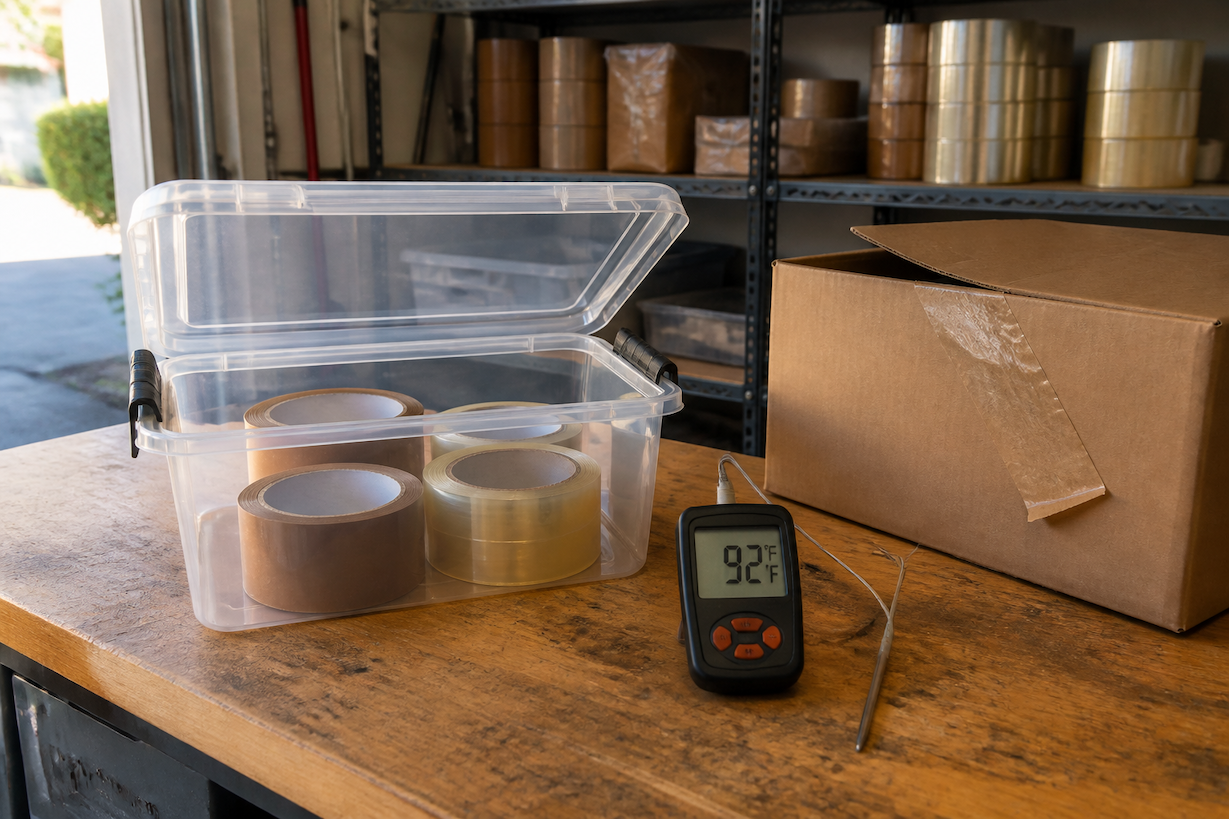
Ninety degrees in a warehouse corner does more damage to a roll of tape than most sellers realize. That box you sealed up in July? Give it two weeks near a hot window and watch the flap pop open on its own. Adhesive is a chemical compound, not a rubber band — heat softens the resin, and once it’s cooked, no amount of pressing down brings the stick back.
Twenty-some years of watching packaging tapes fail in the field taught this lesson the hard way: it’s rarely the tape brand that’s the problem. It’s where and how that tape sat before it ever touched a box. Etsy sellers packing out of a garage, a spare room, or a storage unit are especially exposed — those spaces swing 20 or 30 degrees hotter than a climate-controlled office. Get the storage part wrong, and you’re throwing away good tape (and good money) before it ever does its job.
What You’ll Learn and What You Need Before You Start
Picture this: a seller pulls a roll from a hot garage shelf in July, presses it to a box flap, and watches the seal peel loose two days later on the delivery truck. That’s heat damage to the adhesive, and it’s more common than most sellers realize once summer temps climb past 90°F. By the end of this walkthrough, you’ll know exactly how to store packaging tapes so the glue stays tacky instead of gummy or brittle.
The Real Cost of Bad Tape Storage
A weak seal means split boxes, refunds, and one-star reviews — not a small thing when margins are already thin. One bad batch of tape can cost more in returns than a whole case would’ve cost to store right.
Tools and Supplies for This Walkthrough
You’ll need a thermometer, an airtight bin, and — if you want better heat tolerance from the start — the lux tape packing options built for warmer climates.
Step 1: Check Your Current Packaging Tape for Early Heat Damage
Bad adhesive doesn’t announce itself — it just quits when you need it most. Before you rethink storage, pull a roll from your current stock and check it. Grab any packing tape you’ve had sitting on a shelf or in a garage through a warm spell and give it a real inspection, not a glance.
What Degraded Adhesive Looks and Feels Like
Here’s what to look for. Heat-stressed rolls often show:
-
Yellowing or discoloration along the edges of the roll
-
A gummy, tacky residue on the backside that transfers to your fingers
-
Uneven unwind — the tape stutters or tears instead of pulling clean
-
Weak initial tack that fails to grip corrugated board within a few seconds
If your tape smells slightly sour or feels softer than usual, that’s the hot melt adhesive breaking down. Once it’s gone gummy, it won’t seal boxes reliably — no matter how much pressure you apply.
Step 2: Pick a Storage Spot That Stays Below 80°F
Why Garages and Loading Docks Wreck Clear Packing Tape
Ever stacked a case of packaging tapes in the garage and figured it’d be fine? It won’t. Once temps climb past 80°F, the adhesive layer softens, oozes toward the edges, and picks up dust — that’s when you get a roll that won’t unwind cleanly or grabs unevenly on cardboard.
Loading docks are worse. Direct sun through open bay doors can push surface temps well past 100°F on a July afternoon, even if the air feels tolerable. That heat bakes right into the roll core.
Store rolls of packers tape in an interior closet, a climate-controlled stockroom, or anywhere shaded and dry. A simple shelving unit away from windows works fine. Skip metal cabinets sitting in direct sun — they trap heat like an oven.
Step 3: Store Rolls Upright and Off the Ground on a Shelf or Rack
Here’s a number that surprises most sellers: a roll left flat on a concrete floor can develop a warp within 30 days, even in a climate-controlled space. Gravity plus pressure equals a flat spot on the core, — once that happens, the tape unwinds crooked no matter what dispenser you use. Storing rolls upright on a shelf — standing on their edge like records in a crate — keeps weight distributed evenly across the core instead of crushing one side.
Wire shelving works better than solid wood here because it lets air move around each roll. Keep rolls at least 4 inches off the ground. Concrete holds ground moisture — moisture is the enemy of any adhesive, including standard box packing tape.
Fix for Warped or Oval-Shaped Rolls
Already got oval rolls? Roll them gently on a flat surface, pressing evenly, for 10-15 seconds. It won’t fully reverse heavy damage, but it buys you a few more usable feet.
Step 4: Seal Bulk Tape Rolls in Bags or Bins Between Uses
Here’s a myth worth busting: leaving a roll out on the workbench “because you’ll use it again tomorrow” doesn’t save time — it costs you tape. Every hour a roll sits exposed to warm air, the adhesive picks up dust and starts softening at the edges. That’s how good packaging tapes turn into rolls that won’t stick to anything by August.
If you buy bulk tape, treat storage like inventory control, not an afterthought. Drop unused rolls into resealable plastic bags or a lidded bin right after each shift — don’t wait until closing time.
-
Use opaque bins if your storage room gets direct sun
-
Keep rolls upright, not stacked flat, to avoid edge deformation
-
Label bins by roll width so staff aren’t digging through everything
Five minutes of sealing up rolls beats replacing a whole case of shipping tape that failed on you mid-shift.
Step 5: Rotate Stock So Older Rolls Get Used First
Picture a warehouse shelf where three cases of tape sit stacked in the order they arrived — except nobody marked the dates, and the newest case ended up in front. Six months later, the crew keeps grabbing from the front, and the back rolls sit near a warm loading dock all summer. That’s how good inventory turns into scrap. Use a first-in, first-out system: label each case with the delivery date, place new stock behind older stock, and pull from the back only when the front row runs dry.
If Your Tape Won’t Stick Anymore, Here’s What Went Wrong
Usually it’s heat exposure combined with age — the adhesive oxidized before anyone used it. Before you write off a bad roll, test it against a fresh one. And if you’re unsure which grade holds up best in your storage conditions, start by picking the right packaging tape for your climate and box weight.
Recap: Your Summer-Ready Packaging Tape Storage System
Heat and sun ruin more tape rolls than actual use does. That’s the truth most sellers miss until a roll won’t stick anymore. Keep your packaging tapes below 80°F, out of direct sunlight, and sealed in their original wrap until you need them. Store rolls flat or upright on a shelf — never stacked under heavy boxes, since pressure warps the core and squeezes adhesive out unevenly.
A few habits make this stick (pun intended): rotate stock so older rolls get used first, keep a small supply near your packing station instead of digging through a hot garage, and check tape edges for tackiness before a big shipping day. And if you’re scaling up, it helps to understand how corrugated box prices change when you buy 25, 100, or 500 so your tape and box orders line up on the same restock schedule.
Recap & Next Steps
Here’s what you just walked through: check your rolls for heat damage, find a spot that stays under 80°F, store rolls upright and off the floor, seal bulk stock in bags or bins between uses, and rotate older rolls to the front so nothing sits forgotten through three summers.
Do this, and your tape actually sticks when you grab it in July instead of unwinding in a gummy mess.
-
Check your tape gun next. A worn dispenser blade drags and tears clear tape, and that’s often mistaken for bad adhesive.
-
Test a few rolls monthly during peak heat — tear off a strip, press it to a box flap, and see if it holds after 10 seconds.
-
Pair storage with the right tape grade. If you’re sealing heavier cartons, move up to a heavy-duty packaging tape rated for higher tensile strength so summer humidity doesn’t matter as much.
-
Set a reorder point now that you know how long a properly stored roll actually lasts, so you’re not stuck grabbing whatever’s on the shelf at a drugstore or dollar store in a pinch.
Twenty-five years in this business teaches you one thing fast: adhesive failure is never really about the tape brand — it’s about where that roll sat for the last three months. A shelf below 80°F, off the concrete, out of direct sun does more for seal strength than any premium formula. Rotating stock so the oldest rolls ship first isn’t busywork; it’s what keeps a warehouse from opening a case in August only to find the adhesive turned to goo. And bagging bulk rolls between uses stops humidity from creeping in and softening that glue line before a single box ever gets sealed.
None of this costs extra money. It just requires a little discipline during the months when heat does the most damage. Get the storage right, and packaging tapes hold their bond through the worst of summer, protecting shipments and saving you from reorders you shouldn’t need.
Walk your storage area this week. Pull a roll, check the edges, check the shelf temperature. Fix what needs fixing before the next heat wave does it for you.


