
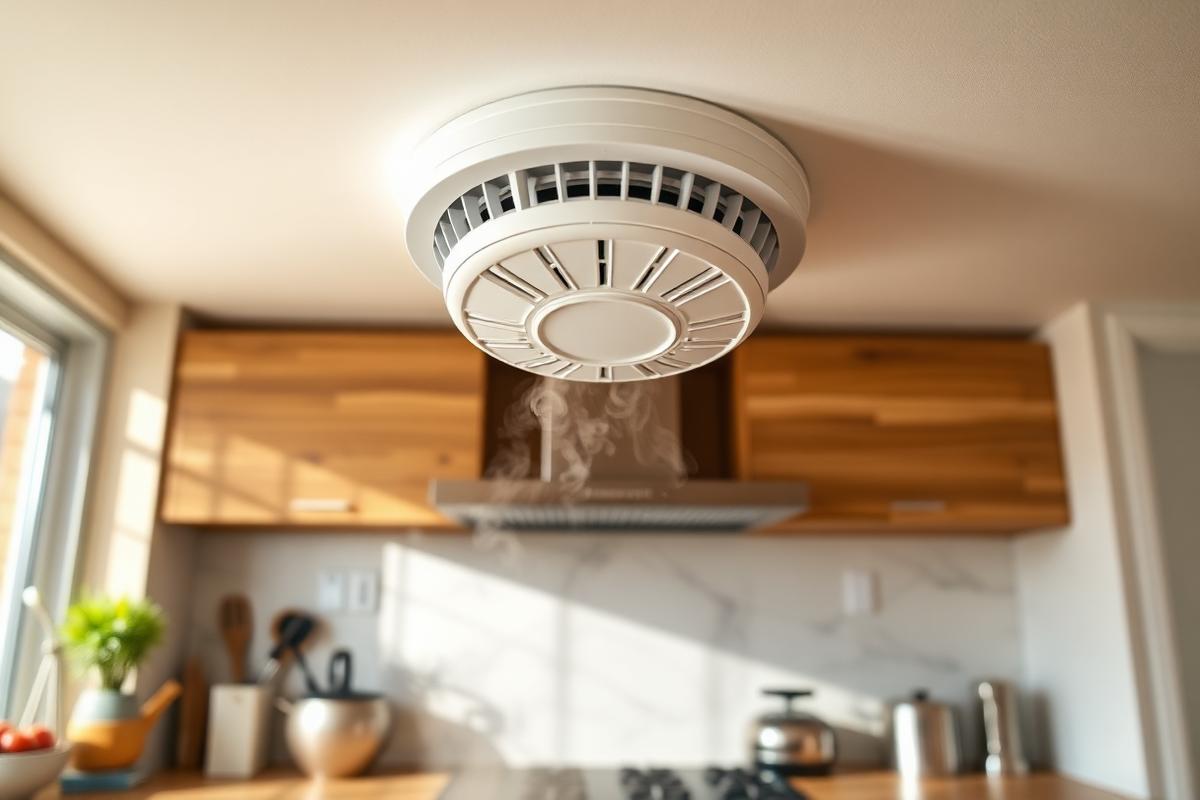
CHARLOTTE, NC – X-Sense highlights the growing need for whole-home protection as fire behavior in modern households becomes increasingly unpredictable.
Heat alarms can complement smoke detection in kitchens, garages, and other areas where fumes, dust, or steam may make conventional smoke alarms less suitable.
Working smoke alarms remain a fundamental part of household fire protection, but they may not be appropriate for every area of a property. Kitchens, garages, workshops, and similar spaces can contain cooking fumes, steam, dust, or exhaust particles that may activate a conventional smoke alarm even when no emergency exists.
Heat alarms provide another form of detection for these challenging environments. Instead of sensing airborne smoke particles, they respond when the surrounding temperature reaches a defined level or, depending on the device, rises rapidly.
A well-planned fire protection system may therefore include different alarm types for different areas rather than relying on a single form of detection throughout the property. Smoke alarms remain essential in sleeping areas, hallways, and living spaces, while heat alarms may offer more appropriate coverage in selected locations.
Smoke Alarms and Heat Alarms Serve Different Purposes
Smoke alarms are designed to detect particles produced by a developing fire. Their ability to identify smoke can provide an early warning before flames or extreme temperatures spread through a room.
Heat alarms operate differently. They respond to temperature rather than smoke, which means they are generally less likely to activate because of ordinary cooking fumes, steam, or dust.
The U.S. Fire Administration explains that heat alarms respond to high temperatures and are especially useful in garages, where smoke alarms are generally not designed or required for use. The agency also notes that some heat alarms can be linked to a wider household detection system so that other alarms respond when excessive heat is detected.
This distinction is important because a heat alarm should not be considered a direct replacement for smoke alarms throughout the home. Since it must detect a significant temperature increase, it may respond later than a smoke alarm in areas where smoke detection is suitable.
The devices are better understood as complementary technologies. Smoke alarms provide early detection in most occupied areas, while heat alarms add coverage in places where the normal environment could cause repeated nuisance alarms.
Where Heat Alarms May Be More Suitable
Kitchens are among the most common locations for heat alarms. Cooking smoke, steam, and burnt food can activate a smoke alarm, particularly when the device is installed too close to an oven or stovetop.
Official fire-safety guidance recommends using a heat alarm in the kitchen rather than installing a conventional smoke alarm directly within the cooking area. Heat alarms respond to elevated temperatures without reacting to routine cooking fumes in the same way as smoke-sensitive devices.
Garages present another challenge. Vehicle exhaust, dust, temperature changes, and airborne particles can make them unsuitable for standard smoke alarms. The U.S. Fire Administration specifically recommends a heat alarm, rather than a smoke alarm, for garage protection.
A heat alarm may also be considered for certain basements, workshops, utility areas, or other spaces where dust, moisture, fumes, or environmental conditions are likely to interfere with smoke detection. The correct choice depends on the room, the alarm’s approved operating conditions, applicable building requirements, and the manufacturer’s installation instructions.
Interconnection Extends the Warning Beyond One Room
A heat alarm installed in a garage or basement may be too far away for people in bedrooms or upstairs living areas to hear clearly. This is where alarm interconnection can add practical value.
In an interconnected system, a warning from one device can be communicated to other compatible alarms. When a heat alarm identifies a dangerous temperature, alarms in other parts of the home may also sound, providing a broader warning.
X-Sense XH02-M interconnected smart heat alarm is designed for use in locations such as kitchens, basements, and garages. It uses an NTC thermistor and has a listed heat-sensitivity range of 129–149°F, or 54–65°C.
When connected through the required SBS50 base station, the XH02-M can become part of a network containing compatible smoke alarms, carbon monoxide alarms, heat alarms, and other supported smart devices. Up to 50 devices can be added to the base station, according to the supplied product specifications.
The system has a stated wireless transmission range of more than 1,700 feet, or 500 meters, in open-air conditions. Actual indoor performance may vary because walls, floors, building materials, electrical equipment, and other obstacles can reduce wireless range.
App connectivity can provide another notification channel. When the heat alarm is connected to the base station and configured through the compatible application, users can monitor the device as part of their home-safety network. Smart alerts can be useful when residents are in another part of the property or away from home, but they should supplement rather than replace the alarm’s audible warning.
Battery Life and Routine Testing Still Matter
The XH02-M uses a sealed, non-replaceable lithium battery. The supplied specifications list a seven-year battery life when connected to the base station and a 10-year battery life when not connected to it.
A sealed battery can reduce the need for regular battery replacement, but it does not make an alarm maintenance-free. Users should test the alarm according to the manufacturer’s instructions, check its status indicators, keep it free from dust and debris, and replace the complete unit when it reaches the end of its stated service life or fails a test.
The XH02-M produces an alarm rated at a minimum of 85 decibels when measured from 10 feet away. During routine testing, homeowners should confirm that the alarm can be heard from occupied and sleeping areas. When devices are interconnected, testing should also confirm that the wider network responds correctly.
Alarm Placement Requires Careful Planning
A heat alarm should be installed only in a location approved by its manufacturer. Ceiling position, distance from appliances, room size, temperature range, humidity, and surrounding airflow can all affect performance.
Homeowners should not remove or disable smoke alarms elsewhere simply because a heat alarm has been added. The U.S. Fire Administration recommends installing smoke alarms inside every sleeping room, outside each separate sleeping area, and on every level of the home, including the basement.
The purpose of the heat alarm is to extend coverage into areas where smoke detection may be unsuitable—not to reduce the number of smoke alarms required in the rest of the property.
Building a Layered Home-Safety System
No individual alarm can address every household hazard or environmental condition. A more complete system uses the appropriate detector in each location and ensures that warnings can reach everyone inside the home.
Smoke alarms, heat alarms, carbon monoxide alarms, and combination detectors each perform different roles. When correctly selected, installed, maintained, and interconnected, these devices can create a broader and more coordinated warning network.
Heat alarms add the most value when they are treated as part of this layered approach. By covering kitchens, garages, and other difficult environments, they can help close gaps that smoke alarms alone may not adequately address.


