Additionally forty-seven years in the profession of Radiation Protection Health Physics
WILMINGTON, NC, UNITED STATES, August 24, 2026 /EINPresswire.com/ — Kenneth M. Coon is a nuclear power professional who has designed a scientific method that may yield evidence of life after death.
Bringing a unique, highly specialized skill set to consciousness studies, Kenneth draws on two distinct areas of professional experience:
• Lead significant event root cause investigator: Twenty years leading multidisciplinary teams at the largest nuclear power station in the United States (Palo Verde) to resolve complex events under strict 45-day deadlines, with more than 40 high-level nuclear investigations completed.
• 48 years in nuclear power health physics (radiation protection): A career dedicated to identifying, measuring, and controlling invisible radiological hazards, including gamma, neutron, beta, and alpha radiation.
Applying these investigative and radiological skills to a two-decade study of the afterlife, Kenneth has achieved a major breakthrough. His methodology unifies two distinct phenomena—one identified in Near-Death Experiences (NDEs) and the other in Deathbed Visions (DBVs). Both experiences are essential; neither stands independently.
Kenneth’s first step was submitting a “Brief Report” to the Journal of Near-Death Studies, published by the International Association for Near-Death Studies. His paper was accepted and published this spring in Volume 42, Number 3.
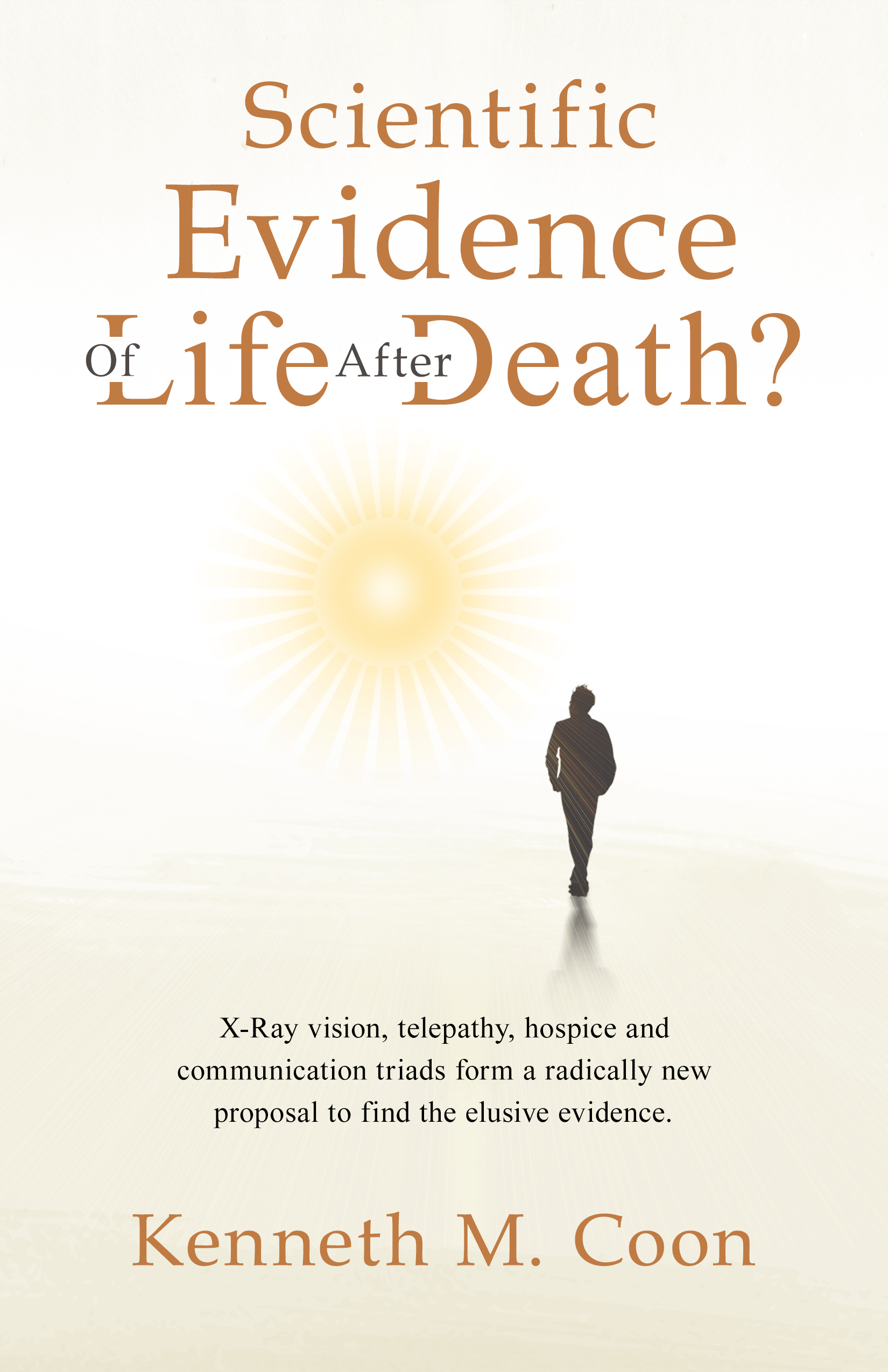
Implementing Kenneth’s vision required access to a resource he did not have: hospice patients. To reach potential collaborators, Kenneth embarked on a unique strategic plan. He published a 246-page nonfiction book titled Scientific Evidence of Life After Death? (available on Amazon), which provides a full-disclosure blueprint for this groundbreaking experimental design. Applying Stephen Covey’s core principle to “begin with the end in mind,” Kenneth’s book defines what success would look like by presenting a premise in which the research has been conducted and his falsifiable hypothesis has been found to be true—in other words, successful. He wrote the book as a “call to action” not only for potential collaborators but also for those interested in:
• Life After Death
• Near-Death Experiences
• Deathbed Visions/Visitation
• Consciousness
As an avid consumer of material on these subjects himself, Kenneth states:
“The goal in writing this book was to provide readers, both fellow scientists and individuals interested in all aspects of life after death, with a fresh new investigative approach, one that breaks the mold of dependence on recycled anecdotal stories instead of taking the hard path toward developing and implementing real scientific methods and protocols. The titles of many books claim those stories as evidence, when scientific methods require some or all of these attributes:
• A realistic and logical baseline theory
• A defined experimental group
• A falsifiable hypothesis
• Consistent testing of that hypothesis
• A well-defined criterion for what constitutes the hypothesis as “true”
• Empirical and measurable quantitative data
• Consistent documentation of performance and data collection
• Independent replication using identical processes and protocols
Nuclear power demands precision in planning and execution. Readers will recognize the philosophy, mindset, and related skills in the structure of this book, which includes the actual procedure for execution.”
Throughout his journey, Kenneth’s favorite quote has been the following:
“The question of whether man survives after physical death is surely one of the most important that he can ask about himself. Yet it has so far received little attention and less support from scientists than many other questions of lesser importance. If results in this field of inquiry have been small and remain indecisive, that is because the laborers have been few. When more scientists understand the theoretical issues involved in studying the question of survival after death, and when more of us agree that, despite formidable difficulties, the question is amenable to empirical investigation, then we can expect to make much more rapid progress.” (Ian Stevenson 1977 Journal of Nervous and Mental Disease)
Media Contact:
Kenneth M. Coon
Ken@ScientificEvidenceOfLifeAfterDeath.com
(657) 512-9284
ScientificEvidenceOfLifeAfterDeath.com &
LNK.bio/ScientificEvidenceOfLifeAfterDeath
Kenneth M. Coon
Scientific Evidence Of Life After Death
+1 657-512-9284
ScientificEvidenceOflLfeAfterDeath.com
Visit us on social media:
LinkedIn
Legal Disclaimer:
EIN Presswire provides this news content “as is” without warranty of any kind. We do not accept any responsibility or liability
for the accuracy, content, images, videos, licenses, completeness, legality, or reliability of the information contained in this
article. If you have any complaints or copyright issues related to this article, kindly contact the author above.

Media gallery