
Key Takeaways:
- CMS permanently redefined direct supervision effective January 1, 2026, allowing supervising physicians to meet requirements through real-time, two-way audio-visual technology instead of standing physically in the office suite.
- Audio-only phone calls do not satisfy the new standard; the connection must carry both live audio and live video at the same time.
- Contrast-enhanced imaging, incident-to services, and pulmonary or cardiac rehabilitation programs all qualify for virtual direct supervision, though services tied to 010 or 090 global surgery periods remain excluded.
- Documentation showing supervisor identity, real-time availability, technology platform, and connection-failure protocols is what actually holds up during a CMS audit.
CMS Makes Virtual Supervision Permanent
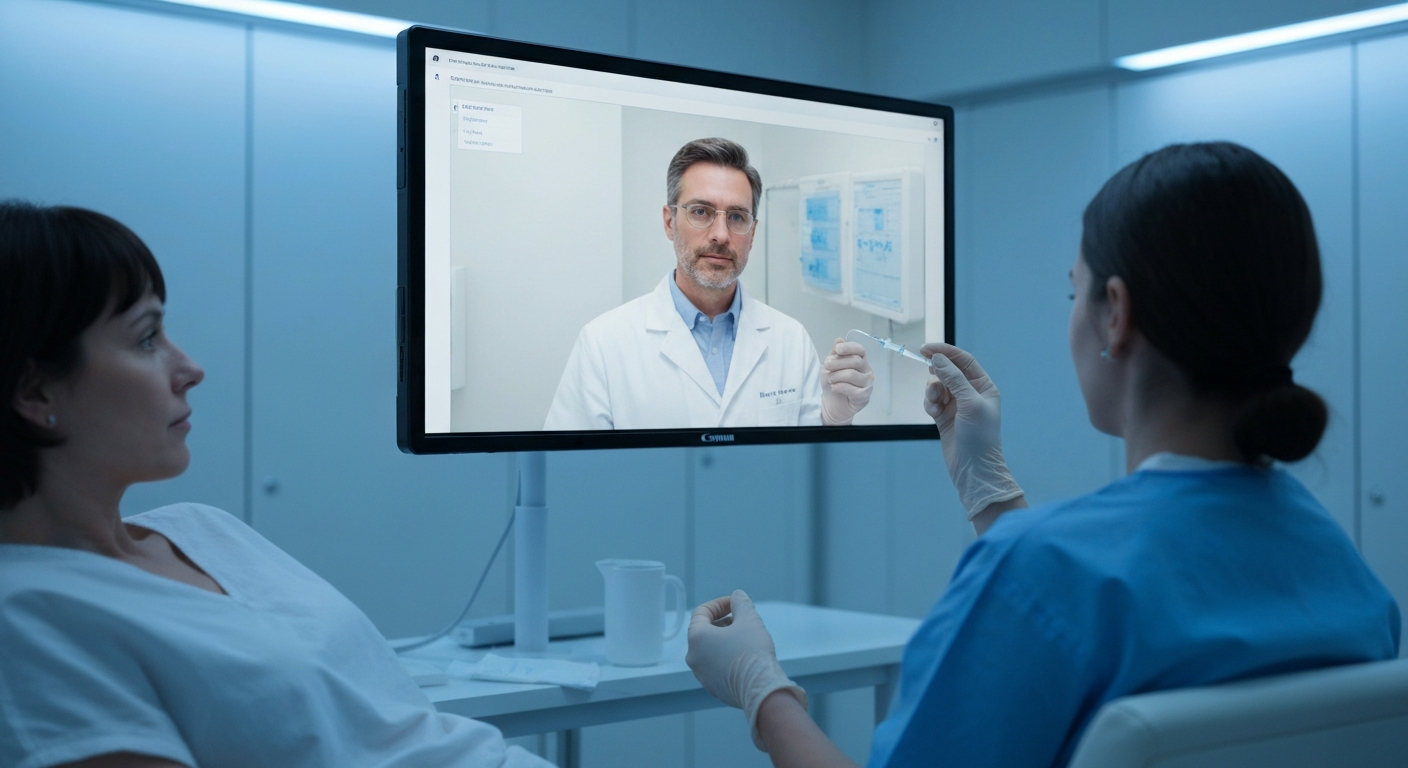
Outpatient imaging centers have spent years working around one stubborn rule: a physician had to be physically present for certain services, including contrast-enhanced scans, or the claim risked denial. That changed for good on January 1, 2026. As part of the Calendar Year 2026 Medicare Physician Fee Schedule, the Centers for Medicare & Medicaid Services permanently redefined “direct supervision” to allow a supervising physician to be present virtually, through real-time, two-way audio-visual technology, rather than standing in the same suite as the patient.
For imaging center administrators, this is a substantial operational shift that touches staffing schedules, contrast safety protocols, and how billing teams document every supervised procedure.
Understanding exactly what qualifies, what still requires someone onsite, and what auditors expect to see is the difference between a smooth transition and a costly compliance gap. For imaging facilities navigating the 2026 virtual supervision rules, these requirements shape everything from daily operations to compliance and billing. The sections below break down the old rule, the new rule, which services are covered, and what documentation needs to look like going forward.
From Physical Presence to Virtual Availability
The Old Rule: Physician Had to Be Onsite
Before 2026, direct supervision had one firm requirement: the physician needed to be physically present in the office suite while the service was performed. A phone call did not count. Being in a different wing of the same building did not count either. The physician had to be immediately interruptible and physically able to step into the room if something went wrong.
That standard created real friction for smaller practices and rural facilities. A single-physician clinic could not bill incident-to services the moment the physician stepped out for lunch or ran to another building. Facilities that relied on part-time or rotating radiologists ended up with narrow windows during which billable, supervised care could even happen.
The New Rule: Real-Time Audio-Visual Qualifies
Effective January 1, 2026, CMS permanently adopted a broader definition. The supervising physician or qualified practitioner may now be present virtually through a real-time, two-way audio-visual connection instead of a physical one. The physician still has to be available to step in immediately and must maintain that live connection throughout the entire service.
The word “throughout” carries weight here. If the connection drops mid-procedure and cannot be restored, supervision is no longer considered met, because the physician is no longer immediately available under the rule’s definition. That single condition shapes almost every technology and documentation decision covered later in this guide.
Which Services Qualify for Virtual Supervision?
Contrast-Enhanced Imaging and Other Diagnostic Tests
Diagnostic tests requiring direct supervision under 42 CFR §410.32 sit at the heart of this rule change, and that category includes contrast-enhanced CT and MRI. These are exactly the studies where a supervising physician needs to be immediately available in case of an adverse reaction. Under the new framework, a radiologist can fulfill that requirement from a remote location as long as the audio-visual connection lets them see, hear, and respond in real time.
This matters most for outpatient imaging facilities that run a high volume of contrast studies without a radiologist physically onsite around the clock. The rule keeps the same safety standard while changing where the supervising physician is allowed to stand while meeting it.
Incident-To Services by Auxiliary Staff
Incident-to billing is one of the most common mechanisms in Medicare Part B, covering services performed by medical assistants, nurses, technicians, and non-physician practitioners under a supervising physician’s NPI. Previously, the physician had to be physically in the office suite for the entire encounter.
Under the 2026 rule, that same supervision can now happen through a live audio-visual connection from another location. For practices juggling multiple sites or limited physician hours, this alone removes a significant scheduling constraint.
Pulmonary and Cardiac Rehabilitation Programs
Pulmonary rehabilitation and cardiac rehabilitation programs also fall within the scope of services requiring direct supervision, and CMS has confirmed virtual supervision applies here too, provided the real-time audio-visual standard is met. Rehabilitation facilities that operate across several locations or depend on part-time medical directors gain meaningful flexibility, since a supervising physician no longer has to physically rotate between sites during every session.
Services Excluded from Virtual Supervision
Not every Medicare Part B service that once required direct supervision now qualifies for the virtual option. Services tied to 010 or 090 global surgery periods are explicitly carved out and still require the physician to be physically onsite. Administrators should treat this exclusion as a firm line rather than a gray area, since billing a globally packaged surgical service under virtual supervision would fall outside CMS’s permanent rule.
Meeting CMS Technology and Documentation Standards
Why Audio-Only Connections Fail Compliance
A live phone call, even one happening in real time, does not satisfy the new definition. CMS specifically requires a connection that carries audio and video simultaneously, which means the supervising physician must be able to both see and hear what is happening during the procedure. Consumer video-calling apps that lack HIPAA-grade security are also unsuitable, since the platform itself must meet HIPAA compliance standards alongside the real-time audio-visual requirement.
Practically speaking, this rules out a few common shortcuts:
- A supervising physician answering by cell phone while reviewing images later
- Using a standard consumer messaging app without encryption or access controls
- Relying on a connection with frequent drops or lag, since uninterrupted connectivity is part of the standard, not a bonus feature
Recordkeeping That Survives an Audit
Meeting the technology standard is only half the compliance picture. CMS reviewers will expect documentation that proves supervision actually happened the way the rule requires. At minimum, imaging centers should be prepared to show:
- The identity of the supervising physician for each service
- Confirmation of real-time availability for the full duration of the procedure
- The specific technology platform used and its HIPAA-compliance status
- A documented protocol for what staff do if the connection fails mid-procedure
Building these records into standard workflow, rather than reconstructing them after the fact, is what separates a practice that sails through a CMS review from one that scrambles to explain a gap.
What This Shift Means for Imaging Centers
For administrators, the permanent nature of this change is arguably as significant as the change itself. This permanent status makes virtual supervision a fixed part of the Medicare Physician Fee Schedule, unlike the temporary pandemic-era waivers imaging centers previously relied on. That gives imaging centers a stable foundation to plan staffing models, contrast safety coverage, and technology investments for the long term.
The operational upside is tangible. Facilities that previously canceled contrast studies because a radiologist could not be physically onsite now have a path to keep those appointments. Extended operating hours become more realistic when supervision no longer depends on a single physician’s physical location. Radiologist-owned platforms such as ContrastConnect have built their entire service model around this exact shift, supervising more than 75,000 contrast exam hours monthly and managing more than 130 contrast reactions each month through a HIPAA-compliant setup, offering a concrete illustration of what compliant virtual coverage looks like at scale.
Compliance Now Hinges on Real-Time Connection Standards
Every part of this rule change comes back to one core requirement: a genuine, uninterrupted, real-time audio-visual connection between the supervising physician and the patient’s location. Get that piece right, along with the documentation to prove it, and the rest of the compliance picture falls into place.
Imaging center administrators evaluating their next steps should treat the transition as an opportunity to tighten protocols, not just satisfy a new box on a checklist. For facilities that need additional physician coverage, partnering with a specialized virtual contrast supervision provider can offer access to qualified radiologists and the technology needed to support compliant remote supervision.
Reviewing current supervision workflows against the CMS standard now, before the next audit cycle, is the most practical way to confirm every contrast-enhanced imaging service stays fully billable and fully compliant.
ContrastConnect
Las vegas
Las Vegas
NV
89109
United States


