
Originally Posted On: https://waterfiremoldtips.com/a-step-by-step-guide-to-commercial-water-damage-restoration-brooklyn-ny-property-managers-trust/
What You’ll Need Before You Start
Before the first call goes out, get these pieces together. It’ll save you an hour of scrambling once water’s already spreading across a Sunset Park basement or a Bushwick ground-floor retail space.
-
Building shutoff locations — main water valve, sprinkler control valve, and any secondary shutoffs for individual units
-
Insurance policy number and adjuster contact — have this on hand, not buried in an email from three years ago
-
A restoration company on speed dial that coordinates directly with insurance and answers 24/7
-
Tenant contact list for the affected floors or units
-
Wet/dry shop vacuum or access to extraction equipment for immediate small-scale response
-
Moisture meter (or a technician who brings one) to check drywall, subfloor, and behind baseboards
-
Photos and video of the damage before anyone touches anything — this protects the claim
-
Building maintenance staff or a super who knows the property’s plumbing layout
-
Time: expect 3-5 days for extraction and drying on a typical commercial floor, longer for multi-story large-loss jobs
-
Basic PPE — gloves, boots, masks — especially if there’s any chance of sewer backup or contaminated water
Realistically, the property managers who move fastest are the ones who already had this list printed out before the pipe burst.
Two floors flooded, tenants calling every ten minutes, and a super who shut off the wrong valve. That’s the 7 am nightmare every Brooklyn property manager knows by heart. A burst supply line in a Bed-Stuy brownstone or a failed sump pump in a Sunset Park mixed-use building doesn’t wait for business hours — and neither should the response.
Commercial water damage restoration Brooklyn property managers actually trust isn’t about who answers the phone fastest. It’s about who can manage the whole mess — extraction, drying, insurance paperwork, and repairs — without turning a two-day job into a two-week vacancy. Older housing stock, tight lot lines, and shared plumbing systems in multi-family buildings mean water travels fast and hides well behind plaster and under subfloors.
Get the order of operations wrong, and you’re looking at mold complaints, HPD violations, or a denied claim. Get it right, and the building’s back in operation before tenants even finish complaining on the group chat. Here’s the exact sequence to follow, step by step.
What You’ll Achieve With This Guide (And What You’ll Need First)
Picture this: a sprinkler head snaps on the fourth floor of a Bushwick mixed-use building at 6 am, and by the time the super calls it in, water’s already dripping into two retail units below. That’s the exact moment this guide is built for. Follow it, and you’ll move from first alarm to signed-off repair without losing tenants, lease income, or your adjuster’s patience. Done right, commercial water damage restoration Brooklyn property managers rely on follows a repeatable sequence — not guesswork.
Documents and Contacts to Have Ready Before the Cleanup Crew Arrives
Before anyone shows up with extraction gear, pull together your insurance policy number, adjuster contact, building schematics, and tenant contact list. Have your lease agreements handy too — they dictate who’s liable for what. And keep the number for emergency flood cleanup Brooklyn crews saved, not searched for at 2 am.
Step 1: Shut Off the Source and Secure the Building
Water doesn’t stop for anyone. The first move in any commercial water damage restoration Brooklyn job is killing the source — not calling anyone, not documenting anything, just shutting the valve. Every minute a pipe keeps flowing adds gallons to a bill that’s already going to hurt.
Locating Main Shutoffs in Older Brooklyn Brownstones and Multi-Family Buildings
Brownstones in Park Slope and Bed-Stuy often have shutoffs buried behind decades of renovations — sometimes in a basement closet, sometimes under the stairs. Newer multi-family buildings usually keep the main valve in the mechanical room near the water meter. Know where yours is before an emergency, not during one.
Once the water’s off, secure the property: block stairwells, rope off flooded common areas — shut down electrical systems in affected zones. If you’re managing multiple units and can’t reach a working shutoff fast, call a disaster recovery company near me immediately. For basement units especially, a basement flood cleanup company can get extraction moving before mold sets in.
Step 2: Call Your Insurance Adjuster and a Restoration Company at the Same Time
Who do you call first when three floors of a Brooklyn Heights rental are taking on water? Neither — call both, back to back, within the same ten minutes. Waiting for the adjuster before you bring in a crew just extends the crisis and adds a day to the bill.
What to Tell Them on the First Call to Speed Up the Claim
Give the adjuster your policy number, unit count, and a rough damage description. Give the restoration company the same details, plus building access instructions. Any commercial water damage restoration Brooklyn job moves faster when both parties get identical facts up front — no gaps, no re-explaining.
Ask the restoration crew two direct questions:
-
Do they offer a burst pipe cleanup service, and can it start today?
-
Do they handle mold remediation for landlords NYC requires if the moisture sits past 48 hours?
A company that answers yes to both, without hedging, is the one worth keeping on speed dial.
Step 3: Get a Professional Damage Assessment and Moisture Mapping
Here’s a number that surprises most building owners: moisture readings can spike behind drywall up to 72 hours after a pipe stops leaking, long after the floor looks dry. That’s why any real commercial water damage restoration Brooklyn job starts with a moisture map, not a mop.
How Technicians Test for Hidden Moisture Behind Walls and Under Flooring
Techs use penetrating moisture meters, thermal cameras, and hygrometers to track water migration through studs, subfloor, and insulation. In older Brooklyn brownstones with plaster walls, this step matters even more — plaster holds water differently than drywall and hides damage longer.
For basement units, the same mapping process applies before any flooded basement restoration Brooklyn work begins. And in buildings with on-site clinics or medical suites, techs flag any area where trapped moisture could trigger medical facility mold remediation down the line. No guessing. Just readings, logged and documented for the adjuster.
Step 4: Start Water Extraction and Structural Drying
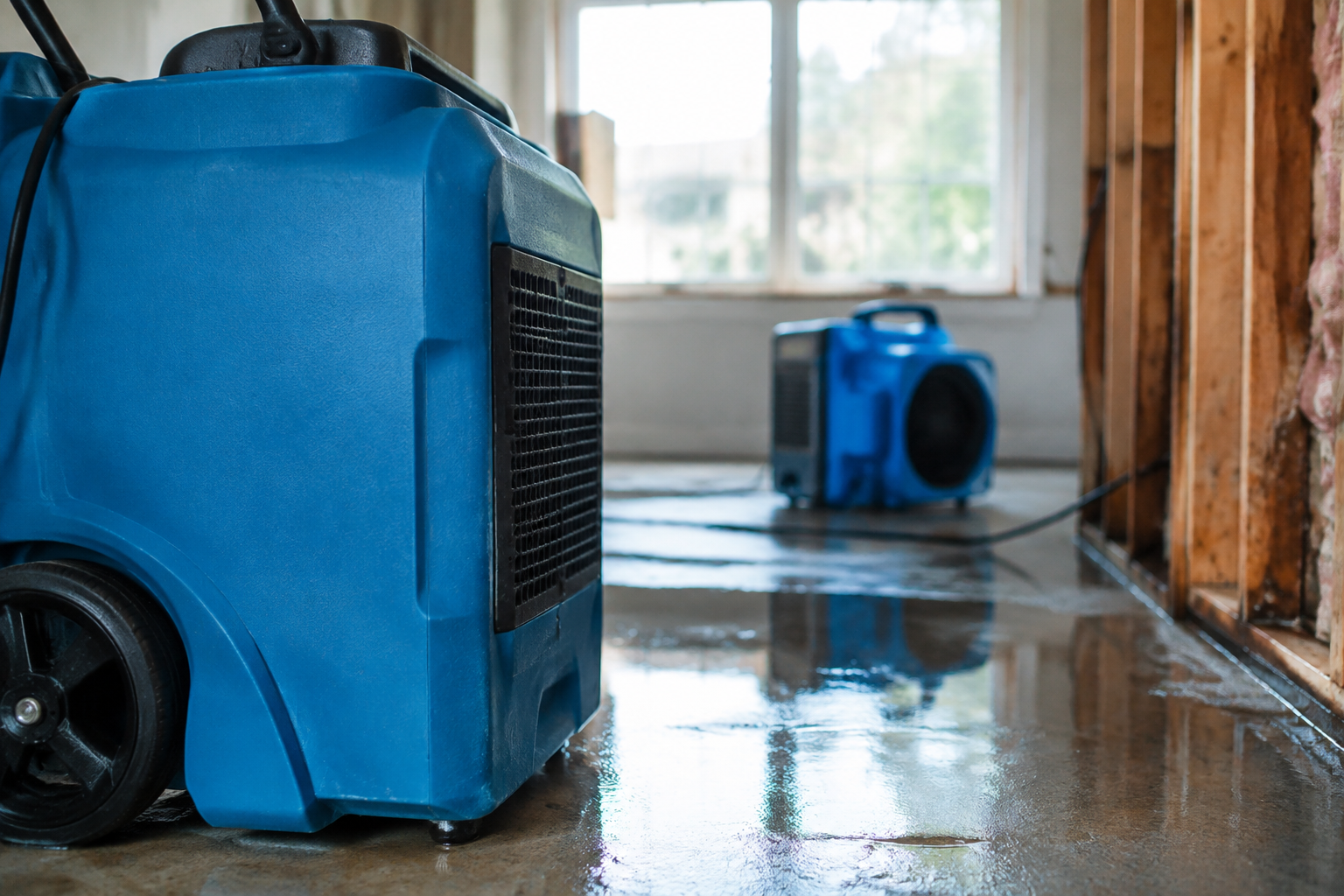
Here’s a myth worth killing right now: running fans for 48 hours does not mean a building is dry. It means it looks dry. Commercial water damage restoration Brooklyn crews rely on moisture meters, not guesswork, before calling any floor complete.
Why Drying Timelines Depend on Brooklyn’s Humidity and Building Density
Brooklyn’s brick row houses and pre-war multi-family stock hold moisture differently than newer construction — dense masonry walls in neighborhoods like Bay Ridge or Sunset Park can trap water for weeks if drying is rushed. Add a humid Brooklyn summer to the mix and drying cycle times stretch further than they would in a drier climate.
Left unresolved, trapped moisture becomes a mold problem fast — and for landlords, that’s a legal exposure too. Buildings already flagged under landlord mold compliance NYC rules can’t afford a slow drying process. Extraction equipment, dehumidifiers, and daily moisture logs aren’t optional here. They’re what separates a finished job from a callback three weeks later.
Step 5: Handle Sewage Backup or Contaminated Water Separately
Sanitary Cleanup Steps When City Sewer Systems Back Up During Storms
Picture a Gowanus mixed-use building after a July downpour — basement floor drains push back sewage into the mechanical room, and now the water isn’t just water. It’s category three, contaminated, and dangerous to touch without gear. This is where commercial water damage restoration Brooklyn crews split the job in two: clean water first, sewage second, never mixed. City sewer capacity gets overwhelmed fast during heavy storms, and older Brooklyn buildings on combined systems take the brunt of it.
Do this immediately:
-
Shut off HVAC intake near the affected area
-
Rope off the space — no tenants, no staff
-
Call a licensed crew trained in biohazard protocols, not general cleanup
Standing sewage left untreated for 48 hours often turns into a mold problem next, which is exactly why buildings later end up needing HPD mold violation remediation NYC services. Handle it separately, and handle it fast.
Step 6: Repair, Rebuild, and Verify the Building Is Tenant-Ready
Drying isn’t the finish line. It’s just where the rebuild starts. Once moisture readings hit normal, crews move into drywall, flooring, and paint — matching finishes so a repaired unit doesn’t look patched together. This is where a lot of commercial water damage restoration Brooklyn jobs stall out if the contractor isn’t managing trades in the right order.
A good crew handles this in sequence: framing and subfloor repairs first, then electrical and plumbing sign-off, then finishes. Skip a step — say, closing up walls before an electrician clears wiring — and you’ll be reopening them next month.
Before tenants move back in, insist on a final walkthrough with moisture meters, not just a visual check. Buildings in humid climates, including our teams working on commercial water damage restoration Florida projects, know hidden dampness behaves differently depending on regional humidity and construction materials. Brooklyn’s older brick and masonry stock needs the same scrutiny before anyone calls it done.
Common Mistakes Property Managers Make During Commercial Water Damage Restoration
How many times has a small leak in your building turned into a five-figure repair bill because someone waited a week to call it in? That’s the mistake we see most in Brooklyn buildings — delay. A pipe drips into a wall cavity, nobody flags it, and by the time drywall gets pulled, mold’s already established.
Other recurring errors during commercial water damage restoration Brooklyn jobs:
-
Skipping moisture readings after the visible water is gone — surfaces look dry, framing isn’t.
-
Not documenting the loss before cleanup starts, which slows the insurance claim down.
-
Ignoring HPD deadlines — if mold shows up on a violation notice, you need HPD mold violation removal handled fast, not scheduled for next month.
-
Hiring based on price instead of response time and credentials.
Fix these, and the whole restoration cycle moves faster — fewer surprises, fewer tenant complaints, fewer disputes with the carrier.
How to Verify the Restoration Job Was Done Correctly Before Reopening
Roughly 30% of moisture-related callbacks in older buildings trace back to one thing: nobody checked behind the walls before the space reopened. That number should worry any property manager signing off on a job.
Before Brooklyn tenants move back in, pull the moisture logs. A proper commercial water damage restoration Brooklyn crew tracks daily readings on drywall, subfloor, and framing — not just a final “looks dry” walkthrough. Ask for the numbers, not the opinion.
Next, walk the site yourself.
Check for:
-
Musty odor near baseboards or HVAC returns
-
Warped flooring or bubbling paint
-
Discoloration on ceiling tiles
If the crew that handled your water damage cleanup Brooklyn teams performed can’t produce a final clearance report with moisture meter readings, don’t sign off yet. Get it in writing first.
How-To FAQ
How much does Servpro charge for water damage?
There’s no flat rate — cost depends on square footage, how many floors got hit, and whether the water was clean or contaminated. For a Brooklyn multi-family building, a two-floor clean-water loss might run a few thousand dollars, while a sewage backup across multiple units climbs fast once you factor in demolition and disposal. If the damage is insurance-covered, your restoration company should bill the carrier directly rather than handing you a number upfront.
Who is the biggest restoration company?
Size isn’t the right question for a property manager — response time and insurance coordination are. National franchise brands have name recognition, but what actually matters in Brooklyn is a crew that can hit your building within 60 minutes, knows the borough’s older plumbing and co-op board quirks, and talks directly to your adjuster instead of routing everything through you.
What does water damage restoration include?
It includes extraction, structural drying, moisture testing, sanitizing, and repair — not just mopping up standing water. A full job typically covers water removal, dehumidification of walls and subfloor, mold prevention treatment, and rebuilding damaged drywall, flooring, or ceilings. For commercial jobs, it also means documenting everything for the insurance file as the work happens, not after.
How to tell if water damage is permanent?
Permanent damage usually means the material has warped, delaminated, or grown mold beyond the point of drying it out. Drywall that’s crumbling, subfloor that’s soft underfoot, or wood trim that’s swollen and separating are gone — replace them. Anything caught and dried within 24 to 48 hours, on the other hand, often survives without needing full replacement.
How long does commercial water damage restoration take in Brooklyn?
A straightforward clean-water loss in a small commercial space usually takes 3 to 5 days for drying, plus another week or two for repairs. Larger multi-family buildings with several affected units, or jobs complicated by sewage or Brooklyn’s summer humidity, can stretch to three or four weeks before the space is fully tenant-ready.
Is it safe to keep a building occupied during water damage cleanup?
It depends on what caused the water and how far it spread. Clean-water losses in isolated areas often allow the rest of the building to stay occupied with proper containment. Sewage backups, electrical hazards, or mold growth are a different story — those areas need to be sealed off and, in some cases, evacuated until testing confirms the air and surfaces are safe.
A burst pipe on a Tuesday morning doesn’t wait for a convenient time, and neither should the response. That’s the whole point of having a plan before the water shows up — shutoffs identified, an adjuster and a restoration crew on speed dial, and a clear sense of what moisture mapping and drying actually involve. Brooklyn’s older buildings and dense blocks make this harder than it looks; a job that takes three days in a newer suburban property can stretch to a week in a century-old multi-family walkup. That’s not a reason to cut corners on drying time or skip the sewage-specific protocols when city systems back up during a storm.
Commercial water damage restoration Brooklyn property managers can trust isn’t about finding the fastest crew — it’s about finding one that documents everything, coordinates directly with your insurance company, and won’t call a job finished until moisture readings say it’s actually finished. Keep this guide on file. Better yet, save the contact info for a restoration partner now, before the next pipe fails, so step one is a phone call instead of a scramble.
Dual Restoration
5308 13th Ave Ste 615, Brooklyn, NY 11219
(347) 309-7119
dualrestoration.com
View Google Business Profile
Follow us: Instagram · LinkedIn


