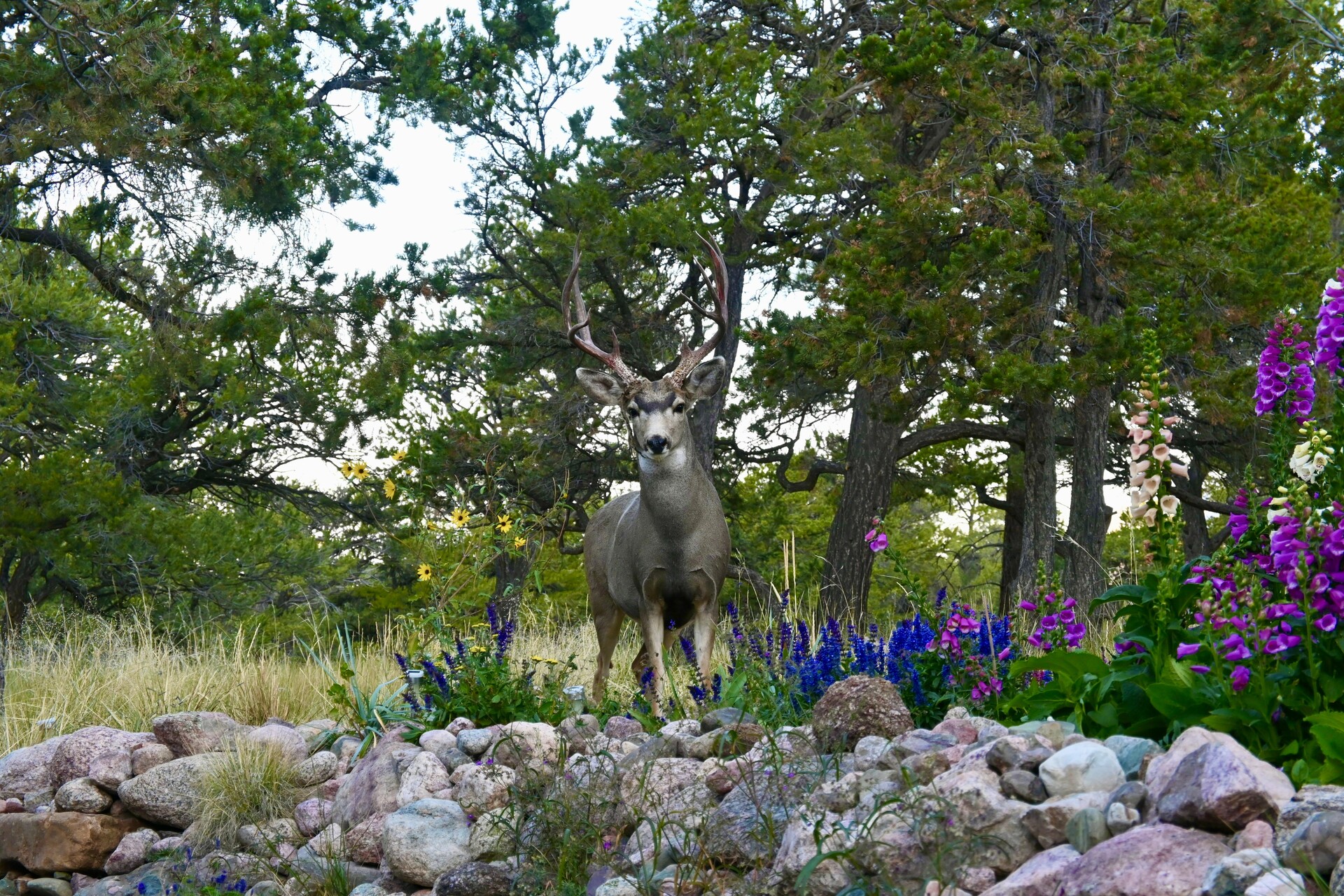
Strong fragrance, coarse texture, bitter compounds, and fibrous foliage can make perennials less appealing to deer, though no plant is completely deer-proof.
SHELBURNE, VT, UNITED STATES, September 29, 2026 /EINPresswire.com/ — Deer browsing can be one of the more frustrating challenges in the landscape, particularly as natural food becomes scarcer later in the year. While no plant is completely deer-proof, horticultural experts at American Meadows and High Country Gardens say gardeners can choose plants more strategically by understanding why deer tend to pass some of them by.
Rather than treating deer resistance as an absolute characteristic, gardeners can look for physical and chemical traits that may make certain plants less palatable or harder for deer to eat. Four characteristics in particular can offer useful clues: strong fragrance, fuzzy or coarse texture, bitter or chemically defended foliage, and thick, leathery or fibrous leaves.
WHY SOME PLANTS ARE MORE DEER-RESISTANT THAN OTHERS
Deer tend to find plants less appealing when their foliage has characteristics such as strong fragrance, fuzzy or coarse texture, bitter compounds, or thick, fibrous leaves. These traits can make plants less palatable or harder to eat, although no plant is completely deer-proof.
“When I’m choosing perennials for a spot where deer are likely to browse, I look at the foliage as much as the flowers,” said Tabar Gifford, Master Gardener and Partnership Cultivator at American Meadows. “I’ve gardened at the same Zone 4 garden at my Vermont home for more than 10 years, and deer pressure can vary dramatically from one season to the next. Some years they barely bother my gardens; other years, when food seems scarce, they’ll eat plants I’ve never seen them touch before. Frustratingly, sometimes right when those plants are about to bloom.”
That variability is one reason plant selection works best as part of a broader deer-management strategy rather than as a guarantee.
1. STRONG FRAGRANCE AND AROMATIC FOLIAGE
Strongly aromatic foliage can be less appealing to browsing deer. Many fragrant plants contain essential oils or other compounds that give their leaves a distinctive scent, including lavender (Lavandula), catmint (Nepeta), Russian sage (Salvia yangii, formerly Perovskia atriplicifolia) and yarrow (Achillea).
“Lavender is a great example of a plant whose fragrance can help make it less appealing to deer,” said Megan Foster, perennial and bulb expert and Category Manager at American Meadows. “The essential oils that give lavender its characteristic scent are also part of what makes it a useful choice for gardens where deer browsing is a concern.”
Catmint, including ‘Walker’s Low,’ Russian sage and yarrow offer similarly aromatic foliage. In dry landscapes, aromatic plants such as Artemisia can also bring this characteristic to waterwise plantings.
2. FUZZY OR COARSE FOLIAGE
Leaf texture can also influence how appealing a plant is to browsing deer. Fuzzy, hairy, coarse or prickly foliage can be less pleasant to eat than soft, tender leaves.
Black-eyed Susan (Rudbeckia) is one familiar example. Its foliage has a somewhat coarse texture, and varieties such as ‘Indian Summer’ can add a long-lasting burst of color while offering a texture deer may find less appealing.
Coneflowers (Echinacea) and catmint (Nepeta) also have foliage with more texture than many plants deer readily browse. Catmint combines slightly fuzzy leaves with strong fragrance, giving it more than one characteristic that may make it less appealing to browsing deer.
3. BITTER OR CHEMICALLY DEFENDED FOLIAGE
Some plants are less appealing because of the chemical compounds they produce. Foxglove (Digitalis), for example, contains cardiac glycosides that make the plant bitter and toxic if ingested.
Chemical defenses are one reason gardeners should consider more than appearance when selecting plants for a deer-prone landscape. Because foxglove is toxic if eaten, it should also be planted with appropriate care around children and pets.
4. THICK, LEATHERY OR FIBROUS FOLIAGE
Some plants rely on physical structure rather than fragrance or bitterness to make their foliage less appealing. Thick, leathery or fibrous leaves can be tougher and more difficult for deer to digest.
“Salvia pachyphylla is a good example of a plant with foliage that can be less attractive to deer,” said Lauren Carvalho, Horticultural Manager at High Country Gardens. “Its thick leathery leaves are fibrous and harder to digest.”
This type of foliage is particularly useful to consider in dry Western gardens, where many plants have evolved structural adaptations that help them cope with heat, drought and intense sun. Some of those same adaptations can also make their foliage less attractive to browsing deer. Plants in the genus Artemisia, with their aromatic, finely textured foliage, are another example.
WHY DEER-RESISTANT DOESN’T MEAN DEER-PROOF
Deer resistance is a matter of degree, not a guarantee. A plant’s characteristics matter, but so do local deer pressure, seasonal food availability and what other forage is accessible.
“After more than a decade in the same garden, I’ve learned that deer don’t always follow the rules,” Gifford said. “A plant they ignore one year may suddenly become a target the next. That’s why I think of deer-resistant plants as part of a strategy rather than a promise. I’m especially careful to protect new plantings until they’ve had time to establish.”
That variability is particularly important during periods when natural food is scarce. A plant that deer consistently ignore under normal conditions may still be browsed when other food sources are limited.
PROTECT YOUNG PLANTS WHILE THEY ESTABLISH
Young plants can be particularly vulnerable while they establish, making temporary protection especially useful. Physical barriers such as fencing or individual plant cages can help keep deer away from new perennials while they become established.
Gardeners can also combine plant selection with repellents, scare devices and buffer plantings. Using several approaches together can provide more protection than relying on a single deterrent.
The same principle applies to fall-planted bulbs. Deer tend to avoid bulbs such as daffodils, alliums, fritillaria, grape hyacinths and scilla, making them useful options for spring color in areas where deer browsing is a recurring concern.
A MORE STRATEGIC WAY TO CHOOSE DEER-RESISTANT PLANTS
For gardeners dealing with deer, choosing plants doesn’t have to mean giving up color, fragrance or variety. Instead, paying attention to foliage can provide another useful layer of information.
Aromatic, fuzzy, coarse, bitter, thick or fibrous foliage can offer clues about which plants may be less appealing to browsing deer. Combined with appropriate protection for young plants and other deer-management strategies, those characteristics can help gardeners build landscapes that are more resilient to browsing pressure.
MORE RESOURCES FOR CREATING A DEER-RESISTANT GARDEN AND PROTECTING IT FROM DAMAGE:
• Strategies for Preventing Deer Damage: https://www.americanmeadows.com/blogs/meadowscaping/preventing-deer-damage-in-your-landscape
• Deer Resistant Plants: https://www.americanmeadows.com/collections/deer-resistant-perennial-plants
• Western Deer Resistant Plants: https://www.highcountrygardens.com/collections/deer-resistant-plants
• Deer Resistant Bulbs: https://www.americanmeadows.com/collections/deer-resistant-fall-flower-bulbs
ABOUT AMERICAN MEADOWS
American Meadows is Doing Good Through Gardening. Its wildflower seed mixes, pre-planned perennial gardens, and lawn alternatives have helped gardeners create more beautiful landscapes for more than 40 years. American Meadows provides seeds, plants, gardening resources, and expert guidance to gardeners across the United States. Learn more at https://www.americanmeadows.com
ABOUT HIGH COUNTRY GARDENS
High Country Gardens believes Sustainability Begins In Your Backyard. As an online source for waterwise plants, gardening education and sustainable landscaping resources, High Country Gardens has helped gardeners create beautiful outdoor spaces suited to challenging Western conditions since 1993. Learn more about waterwise lawn alternatives and sustainable landscaping approaches at: https://www.highcountrygardens.com
Tabar Gifford
American Meadows Inc
ltabar@americanmeadows.com
Visit us on social media:
Instagram
Facebook
YouTube
TikTok
Other
Bluesky
LinkedIn
About American Meadows: How Meadowscaping Makes It Better with Pollinator-Friendly Plants & Sustainable Gardening
Legal Disclaimer:
EIN Presswire provides this news content “as is” without warranty of any kind. We do not accept any responsibility or liability
for the accuracy, content, images, videos, licenses, completeness, legality, or reliability of the information contained in this
article. If you have any complaints or copyright issues related to this article, kindly contact the author above.

Media gallery